World No. 1 Brooks Koepka, World No. 2 Dustin Johnson, World No. 4 Rory McIlroy and World No. 6 Justin Thomas along with past Major champions Bubba Watson, Sergio Garcia, Zach Johnson and Henrik Stenson headline exciting field for Canada’s National Open Championship
Canadian tournament exemptions include 2019 Web.com Tour winner Michael Gligic; European Tour player Austin Connelly; PGA TOUR China winner Richard Jung; PGA TOUR Latinoamerica winner Drew Nesbitt; and Team Canada members Joey Savoie, Josh Whalen, and Chris Crisologo
Corey Conners, Adam Hadwin, Mackenzie Hughes, David Hearn, Nick Taylor, Ben Silverman, Roger Sloan, Adam Svensson, and Mike Weir headline list of 20 Canadians set to compete at Hamilton Golf and Country Club from June 3-9.
HAMILTON (Golf Canada) – Golf Canada and RBC are pleased to announce the final field vying for the US$7.6 million purse at the 2019 RBC Canadian Open, June 3-9 at Hamilton Golf and Country Club.
World no. 2 and Team RBC member Dustin Johnson will try to defend his title against a stellar field of PGA TOUR stars led by World No. 1 and 2019 PGA Championship winner Brooks Koepka. World No. 4 Rory McIlroy along with World No. 6 Justin Thomas will make their RBC Canadian Open debut and will be joined at Hamilton by former Masters champions Sergio Garcia, Danny Willet and Bubba Watson.
Other notable additions to the field for the 110th playing of Canada’s National Open Championship include FedExCup leader Matt Kuchar, Major champions Zach Johnson, Henrik Stenson, Jason Dufner, Padraig Harrington, Keegan Bradley and Jimmy Walker, along with former world No. 1 Luke Donald.
Johnson, a 20-time winner on the PGA TOUR, and Kuchar, a nine-time PGA TOUR winner will lead a roster of Team RBC players at Hamilton Golf and Country. Team RBC has seen unprecedented success in 2019 as Ryan Palmer, Graeme McDowell, Canadian Corey Conners, Johnson, and Kuchar have all won on the PGA TOUR.
Other Team RBC players competing including world no. 19 Webb Simpson, 2013 RBC Canadian Open champion Brandt Snedeker; Jim Furyk, a 17-time winner and two-time RBC Canadian Open champion, including at Hamilton in 2006; along with fellow Canadian Team RBC players Adam Hadwin, David Hearn, Nick Taylor, Ben Silverman, and Roger Sloan round out the contingent.
“The field is shaping up to be one of the best in recent memory and we’re ready to welcome the best players in the world teeing it up at the 110th playing of Canada’s National Open Championship,” said Tournament Director Bryan Crawford. “This year’s championship features a great mix of stars from all around the world, more than 30 combined Major titles and the deepest field of Canadian talent ever to challenge for our National Men’s Open title. Along with great golf, we’ll be offering fans so many great on-site experiences from our key partners, a new food initiative to try some of Hamilton’s best restaurants, and thanks to the RBCxMusic Concert series, fans can take in music from Florida Georgia Line and The Glorious Sons on Friday and Saturday.”
In total, 156 players will compete for the US$7.6 million purse next week in Hamilton when the RBC Canadian Open returns to the storied club for the first time since 2012 and sixth time ever.
Click here for a full field list for the 2019 RBC Canadian Open
PGA TOUR Season Winners… A total of 11 in-year PGA TOUR winners (accounting for 13 PGA TOUR titles in 2018-19) will compete at Hamilton Golf and Country Club led by two-time winners Brooks Koepka (THE CJ CUP @ NINE BRIDGES, PGA Championship) and Matt Kuchar (Mayakoba Golf Classic and Sony Open). Other 2018-19 season winners include Kevin Tway (Safeway Open), Adam Long (Desert Classic), Martin Trainer (Puerto Rico Open), Dustin Johnson (WGC-Mexico Championship), Rory McIlroy (THE PLAYERS Championship), Graeme McDowell (Corales Puntacana Resort and Club Championship), Corey Conners (Valero Texas Open), Ryan Palmer (partnered with Jon Rahm at the Zurich Classic of New Orleans), and Sung Kang (AT&T Byron Nelson).
Past Champions… Two past winners at Hamilton Golf and Country Club will be returning to familiar territory this year as 2006 winner Jim Furyk and 2012 winner Scott Piercy are in the field this year. Furyk also won the 2007 Canadian Open. Two other past RBC Canadian Open winners in the field at Hamilton are Brandt Snedeker (2013) and Dustin Johnson (2018).
The 2003 RBC Canadian Open was contested at Hamilton and won by Bob Tway. His son, Kevin Tway, will be in the field.
Twenty Canadians to compete for the National Men’s Open Title… Leading the Canadian contingent at Hamilton will be Abbotsford, B.C. native and world No. 77 Adam Hadwin, who will return to Hamilton to play in his 10th RBC Canadian Open. Other confirmed Canadians include past PGA TOUR winners Mackenzie Hughes of nearby Dundas, Ont., Nick Taylor of Abbotsford, B.C., and Corey Conners of Listowel, Ont. Ben Silverman of Thornhill, Ont., David Hearn of Brantford, Ont., Adam Svensson of Surrey, B.C., and Roger Sloan of Merritt, B.C. round out Canada’s PGA TOUR contingent along with Canadian Golf Hall of Famer Mike Weir, making his 28th start at the Canadian Open.
Canadians receiving exemptions into this year’s RBC Canadian Open include Ryan Yip of Calgary along with Toronto natives Richard Jung and Drew Nesbitt.
Three members of Canada’s National Men’s Team—Joey Savoie of LaPrairie, Que., Chris Crisologo of Richmond, B.C. and Josh Whalen of Napanee, Ont.—have also received exemptions.
Dual-citizen and European Tour player Austin Connelly of Claire, N.S., who was recently announced as one of Canada’s representative for the upcoming Pan-Am Games in Lima, Peru, will play his third RBC Canadian Open.
Burlington’s Michael Gligic, a winner on the Web.com Tour in 2019, has earned a spot in the field as the highest-ranked golfer on the Web.com Tour’s season-long points list who played on the Mackenzie Tour-PGA TOUR Canada in 2018.
Marc-Etienne Bussieres of Quebec earned a place in this year’s RBC Canadian Open after finishing No. 1 on the PGA of Canada’s Order of Merit in 2018.
Local resident Michael Blair of Ancaster, Ont. won the Ontario Regional Qualifier to earn his spot in the field and amateur Matt Anderson of Mississauga, Ont. earned his spot by winning the Quebec Regional Qualifier.
Each of the 21 Canadian players in the field will look to become the first Canadian to capture the national title since Pat Fletcher accomplished the feat in 1954.
Two-time reigning Canadian Men’s Amateur Zach Bauchou of Forest, Virginia along with 2018 Canadian Men’s Mid-Amateur champion Joseph Deraney of Lexington, Kentucky will also compete at Hamilton.
Final Tournament Exemptions to be Named… Following the Bayview Place DCBank Open presented by Times Colonist on the Mackenzie Tour-PGA TOUR Canada, the winner will earn an exemption to play in the 2019 RBC Canadian Open.
The final four exemptions into the field for the 2019 RBC Canadian Open will be handed out at the Monday Qualifier on June 3, to be played at Heron Point Golf Links near Ancaster, Ont.
Tickets for available rounds of the 2019 RBC Canadian Open can be purchased at www.rbccanadianopen.com.
Marcia wins first Scotia Wealth in dramatic fashion
Pat Marcia (left) is the 2019 Scotia Wealth Management Open champion.
A chip in from the fringe was inches from falling to secure Pat Marcia a Scotia Wealth Management Open win on the 36th hole of the event but as fate would have it the victory took another 600 yards.
Marcia could have earned the win on the 18th hole at the Evergreen Golf Course on Sunday via sinking a chip but a solid second round effort from Lloydminster’s Clint Schiller forced a sudden death playoff in the event. Marcia went left off his tee shot during the playoff hole, the 600-yard hole one. Schiller was true up the middle, after two shots each golfer was just approximately 75 yards shy of the green. Schiller landed his approach on the dance floor; Marcia hooked his shot a tad too far and right onto the back fringe. The Regina based Canadian PGA professional showed some fantastic touch chipping in for birdie putting the pressure on Schiller and his 12-foot putt. Schiller just lipped out giving Marcia his first Scotia Wealth Management Open title.
“This feels fantastic,” he said after the win. “The Evergreen is one of my favourite courses in the province. I come back here all the time, it’s awesome.”
Marcia had a very similar chip shot on the 36th hole to win and he just slid it by the hole.
“I just said I have one chance to win here, give it your best shot,” he told Golf Saskatchewan about the moment. “Luckily I was able to make par and get to a playoff and get it done.”
The victory was Marcia’s first in the event. He has been in the final group three times and has been second place on two occasions. He said getting the victory was a little bit surprising at this point in the season.
“I definitely didn’t see it coming, my game was not trending in the right direction, but I like where it’s at after this, this is great. It was pretty cool in the playoff to chip in there, it was a pretty special moment” he added.
After round one, Marcia was tied with amateurs Danny Klughart (Prince Albert) and Drew Kocur (Regina) at one-under, 70, the group was the last to tee off Sunday. Schiller was three back going into round two and posted a 70 of his own to force the playoff. Marcia said having an event with both professionals and the top amateurs across the province the field is tough to beat.
“Danny and Drew hit it so good, they are young guys with a lot of strength, they were pounding it by me all day. They are very impressive. This is really cool, there’s not a lot of tournaments in the province where us professionals get to play with amateurs and mingle. This is truly is one of the strongest field of golfers in the province because of it,” Marcia said.
Klughart ended up in a tie for third along with Regina’s Ryan McNall, who is fresh off a Regina Amateur Men’s win. Cory Sawchuk of Prince Albert rounded out the top five. A handful of players were tied for sixth at plus-five.
WCC golfer Autumn Neiszner is one of 14 SAGE scholarship recipients this year.
Golf Saskatchewan is dishing out over $12,000 in scholarships to golfers across the province.
The annual Saskatchewan Academic and Golf Excellence (SAGE) Scholarship program presents scholarships to assist deserving member golfers in their pursuit of high school and post-secondary academic excellence. Golf Saskatchewan Manager of Sport and Championships, Steve Ryde said the organization always enjoys handing out the bursaries.
“Congratulations to all the bursary and scholarship winners this year. We hope the bursary and/or scholarships assist your studies in the classroom for the next stages of your life and also on the golf course. We’re very happy to assist the scholarship recipients in their educational pursuit,” Ryde said.
The following student-athletes are the 2019 recipients:
•Graham DeLaet Scholarship #1 (valued at $1,500) Kade Johnson, Deer Park Municipal GC, Yorkton
•Graham DeLaet Scholarship #2 (valued at $1,500) Carey McLean, Deer Valley GC, Deer valley
•Ron Young Memorial Scholarship (valued at $1,000) Marc Sweeney, Willows GCC, Saskatoon
•Kozy Scholarship (valued at $1,000) Carson Harcourt, Golf Kenosee, Kipling
•Cooke-Kinnear Scholarship (valued at $1,000) Cory Sawchuk, Cooke Municipal GC, Prince Albert
•Fletcher-Reid Scholarship (valued at $1,000) Jace Carlisle, Estevan Woodlawn, Estevan
•Leddy-Heywood Scholarship (valued at $1,000) Griffin Wilson, Elmwood GC, Swift Curren
•Meredith MacPherson-Stalwick Memorial Scholarship (valued at $1,074.06) Veronika Duchscherer, Evergreen GC, Nipawin
•Dr. Garry Hayes Memorial Scholarship $1490.70/2 (valued at $745.35 each) Tyler Buffalo, Golf SK Public player, Saskatoon Joshua Guthrie, Cooke Municipal GC, Prince Albert
•Golf Saskatchewan High School Bursary (valued at $400) Sarah Grieve, Willows G&CC, Saskatoon Lauren Fox, Public Player, Creighton Autumn Neiszner, Wascana G&CC, Regina
The scholarships are rewarded, based on their academic achievements in high school and post secondary programs.
For more information on our scholarship program click here or contact our office.
Rule of the Week June 1 – 7
16.3 Embedded Ball
When Relief Is Allowed
(1) Ball Must Be Embedded in General Area. Relief is allowed under Rule 16.3b only when a player’s ball is embedded in the general area.
There is no relief under this Rule if the ball is embedded anywhere except in the general area.
But if the ball is embedded on the putting green, the player may mark the spot of the ball and lift and clean the ball, repair the damage caused by the ball’s impact, and replace the ball on its original spot (see Rule 13.1c(2)).
Exceptions – When Relief Not Allowed for Ball Embedded in General Area: Relief under Rule 16.3b is not allowed:
When the ball is embedded in sand in a part of the general area that is not cut to fairway height or less, or
When interference by anything other than the ball being embedded makes the stroke clearly unreasonable (for example, when a player is unable to make a stroke because of where the ball lies in a bush).
(2) Determining Whether Ball Is Embedded. A player’s ball is embedded only if:
It is in its own pitch-mark made as a result of the player’s previous stroke, and
Part of the ball is below the level of the ground.
If the player cannot tell for sure whether the ball is in its own pitch-mark or a pitch-mark made by another ball, the player may treat the ball as embedded if it is reasonable to conclude from the available information that the ball is in its own pitch-mark.
A ball is notembedded if it is below the level of the ground as a result of anything other than the player’s previous stroke, such as when:
The ball is pushed into the ground by someone stepping on it,
The ball is driven straight into the ground without becoming airborne, or
The ball was dropped in taking relief under a Rule.
Weyburn Ladies Club opens tap on irrigation funding
Photo courtesy Greg Nikkel/Weyburn Review
The Weyburn Golf Course’s (WGC) Ladies Club has teed off on a fundraising campaign for a new irrigation system for the facility.
The club recently contributed $15,000 back to the Weyburn course that is part of a fundraising campaign with a goal of almost $1 million that will revamp their watering system. Ladies Club President Andrea Corrigan said the group has put funds into other large expenditures, but the irrigation system needs help.
“We put new carpet in the clubhouse, we bought new tables and chairs, big ticket items,” she said. “We have nearly $20,000 in our bank account and we are always buying a dishwasher or flowers, but what can we do to help this course out? Well they need a million-dollar irrigation system, let’s start with that.”
The ladies Club has hosted a very popular tournament every year since 2000 that has raised substantial funds. The group also has their weekly league with skins and 50-50 draws to build up their account. Corrigan said the amounts add up.
“Over the years when you are only doing $36 in 50-50’s for a week or something but $4,000 later that helps towards that $15,000. We’re very proud as a ladies club to help out that way,” she beamed.
The Weyburn Golf Club is celebrating their 100th anniversary this summer. They hosted a par three tournament on May 11 to help kick off the season. The club is holding their Legacy tournament on July 13 with all funds going towards the irrigation system and inducting two lifetime members to the course.
The WGC is also home to PGA Tour professional Graham DeLaet. Fixing the irrigation system and preserving the course is important to Corrigan for the community’s sake and DeLaet’s legacy.
“We’re very proud of Graham, anywhere we go we hear it. My husband and I have been to the President’s Cup when Graham was playing in it,” she said. “We’re very proud to be not only Canadian but that Graham is part of the Weyburn Golf Club, that’s where it started for him. It doesn’t matter where you live, we all need help and it starts with groups like us.”
Corrigan is a long-time board member with the WGC and said years ago they priced an irrigation system, at that time about ten years ago it was $425,000. The cost has since doubled, she said the time to rebuild the infrastructure is now and the city will benefit.
“We’re the skating rink of the summer, they don’t understand that and it’s tough sometimes, but we need to get this done.”
The course now has a fundraising thermometer displayed in the clubhouse tracking their goal.
THE THIRTIES
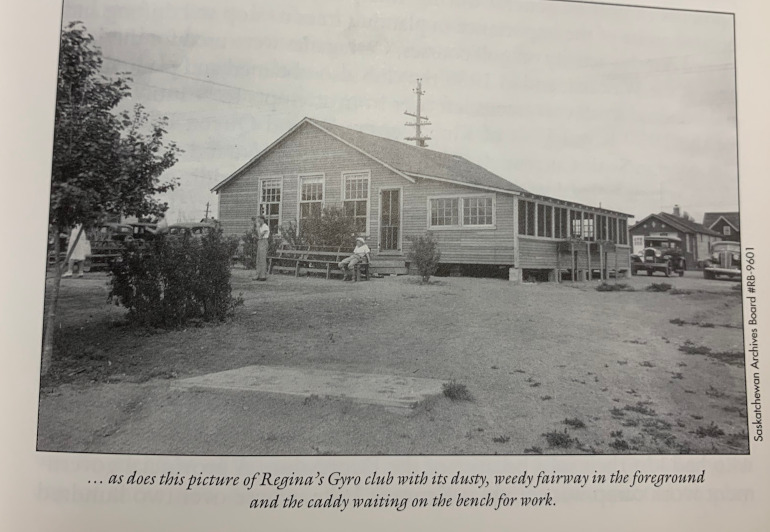
Golfers play a sand green on a Regina course in the 1930's.
THE THIRTIES
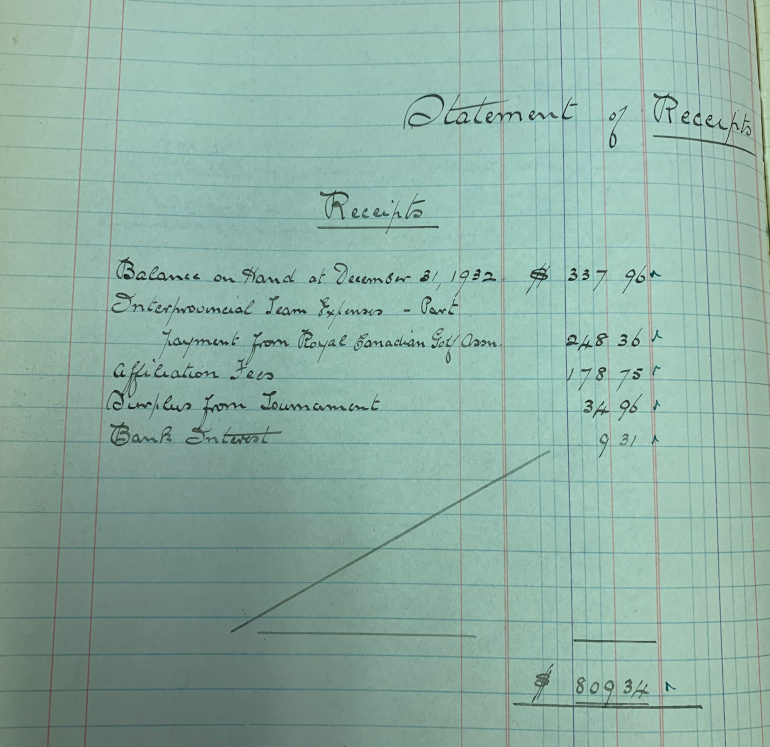
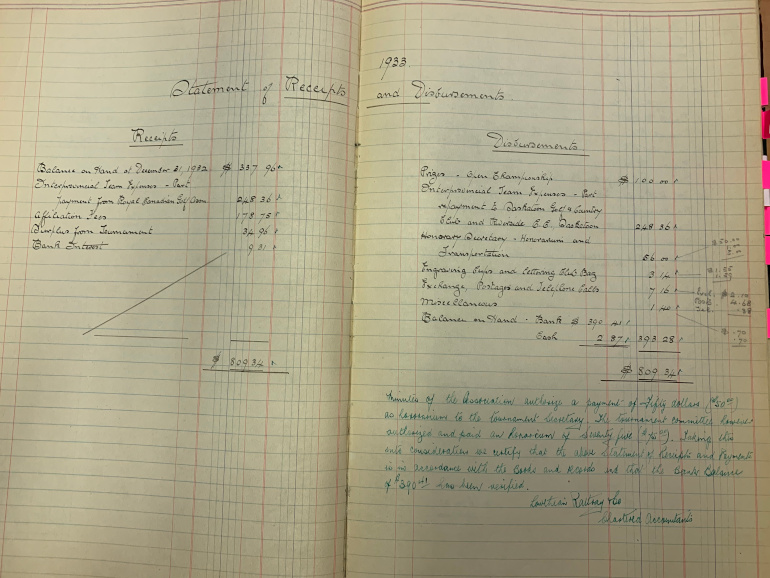
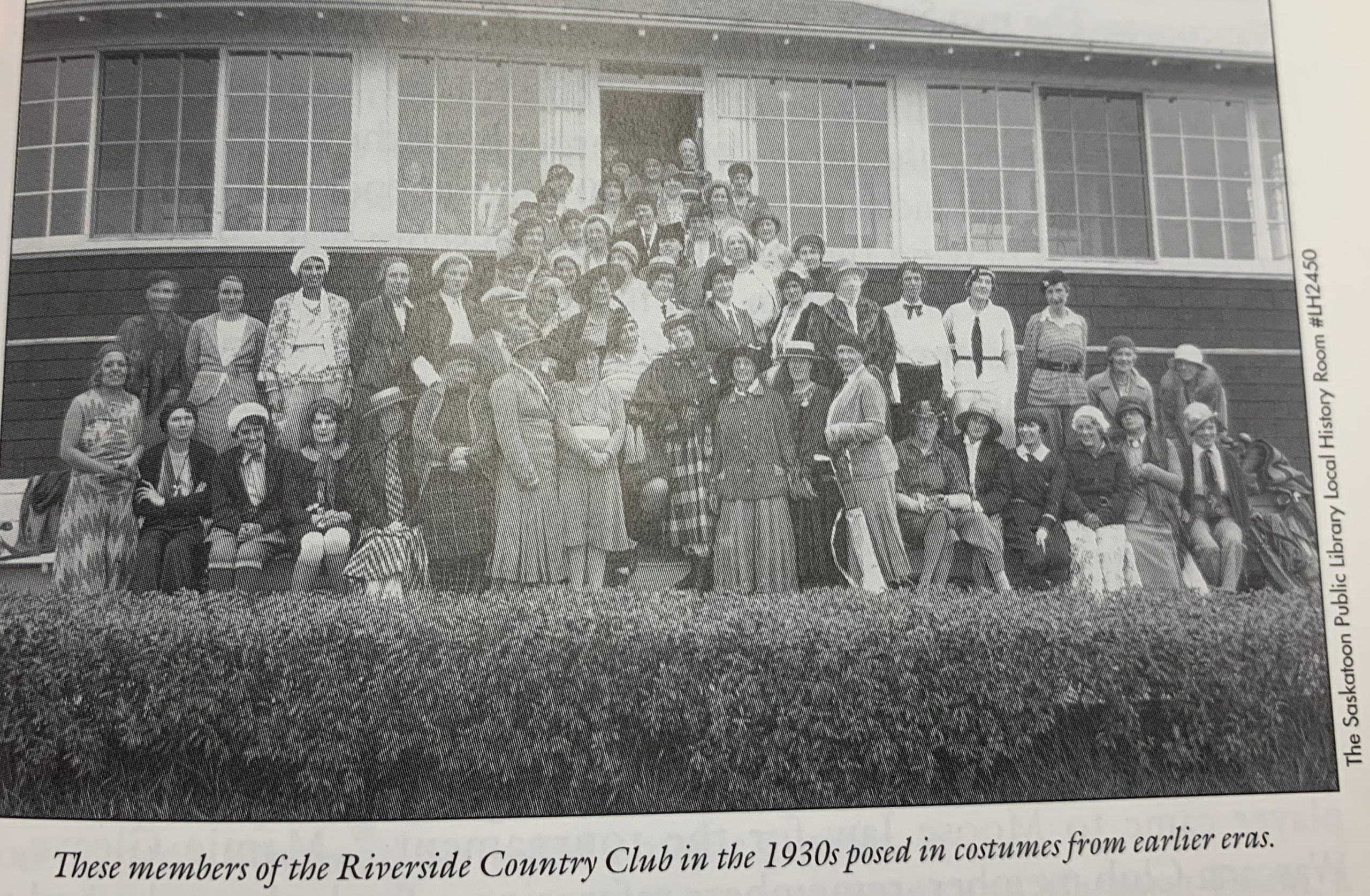
Golf courses were plagued by drought conditions and grasshoppers during the Thirties and the provincial economy was disastrous. The Saskatchewan Golf Association continued to operate with income derived from affiliation fees paid by golf clubs in the province, totaling between $160 and $195 a year.
Championship tournaments were held every year for the men’s Amateur, Junior and Open events. After collecting tournament fees, paying out Open cash prizes of $50 for first place then $25, $15 and $10 for the next placings (or purchased prizes if the winners were not professionals) and paying an honorarium to the secretary, the association showed a small profit most years.
1930 Men: Moose Jaw Golf Club, July 14-18
Home course must have been an advantage since two Moose Jaw players were in the final match of the Saskatchewan men’s amateur, with Tom Russell winning 6 and 4 over E. Alguire.
After sending a team to Jasper last year, the Saskatchewan Golf Association voted to support further inter-provincial team play with a $50 contribution. A committee was set up to choose a Saskatchewan team resulting in four young amateurs being sent to compete at the Royal York Golf Club in Toronto – Tommy Russell and Dale Belford from Moose Jaw, and Phil Morse and W. Kinnear from Saskatoon. Over the decade rail travel expenses were paid for teams to attend five other inter-provincial competitions in Vancouver, Winnipeg, Ottawa, London, and Montreal.
1930 Women: Regina Golf Club, August 11-15
Forty-six golfers entered the provincial women’s competition – eight from Moose Jaw, five from Saskatoon and thirty-three from Regina. Mrs. Gill of Moose Jaw set a new course record with an 86 on Tuesday, but ultimately lost the championship final to Gladys Rideout 7 and 6. Myrtle Creighton was elected the new president and also took the putting contest.
1931 Men: Riverside Country Club, August 17-20
Most golf clubs in northern Saskatchewan were represented as 170 competitors registered for play in the amateur and open tournaments. Twelve professionals from the three prairie provinces competed in the Open followed by a Professionals’ two-day event at the new layout at the Saskatoon Golf Club. Matches were scheduled four minutes apart. Twenty-two-year-old Phil Morse of Saskatoon GC won his third Saskatchewan amateur title in four years, defeating A.R. (Buck) Buchan of Regina Golf Club who was playing in his first major tournament since arriving from Scotland three years earlier. N.C. Byers was thanked for his financial assistance for the Willingdon Cup team.
1931 Women: Saskatoon Golf Club, August 17-21
The women’s tournament was at the Saskatoon Golf Club while the men played Riverside, but that must have presented some difficulties as they voted to schedule a different week in the future. The association planned to further junior girls’ golf in affiliated clubs.
Gladys Rideout won her third consecutive provincial title and her fourth overall by defeating Hilda Yule of Riverside, four and three. There was a lot of interest in the mixed two-ball foursome handicap event as forty-two couples took part.
1932 Men:Regina Golf Club, August 8-11
Saskatchewan Golf Association president Russ Smith and his son Ken both made the quarter-finals of the Amateur. Two 17-year-olds from Saskatoon, Otto Anderson and Jack Millar were the Amateur finalists, playing in heavy wind and a steady drizzle of rain. A hardy Regina gallery of about 100 followed the play which was won by Millar 4 and 3. The junior competition kept getting pushed back as the young men competed in the Amateur and a junior champion still had not been declared at the end of all other play. This led to a discussion about the age bracket for the junior event. Otto Anderson eventually won the junior competition. Joe Lund was declared the Open winner and Hugh Fletcher the runner-up.
The 1932 Senior Men’s Championship was held in Moose Jaw with eight players registered. Brigadier General George Tuxford won on the 13th green over James Balfour of Regina.
1932 Women: Moose Jaw Golf Club, August 15-19
Scorching sun made the climb through the ravines and gullies of the Moose Jaw course exhausting for the competitors. The championship consolation flight became known as ‘the waffle iron flight.’ A beautiful green-handled electric waffle iron was the much-admired and discussed prize donated by the National Light and Power Company and it ultimately went to Saskatoon with the flight winner Mrs. G.H. Anderson. Myrtle Creighton, Saskatoon, won the championship over Mrs. W.L. Taylor of Regina, 5 and 3.
Miss Agnes Rorison of Moose Jaw was mentioned as presiding over the annual meeting, and later as past-president, so she must have taken over from Mrs. J.H.S. Garrett who had been elected president at the 1931 annual meeting.
1933 Men: Saskatoon Golf and Country Club, August 14-17
The provincial amateur tournament attracted 162 entries plus twelve professionals in the Open. Dr. George Bigelow became the first Saskatchewan player to win both the Amateur and Open at the same tournament. He had been Saskatchewan Junior champion in 1926 then became a member of the golf team while studying at Edinburgh University. He entered the British Amateur in 1931 before he returned to Regina with his dental degree. He defeated William Turnbull of Saskatoon 6 and 5 for the amateur title. Bigelow and Tom Ross of Regina were tied at 150 after the regulation two rounds of the Open but Bigelow won the nine-hole playoff by one stroke. Ross received $50 cash for the Open, followed by R.C. MacWilliams of Regina, Hugh Fletcher of Moose Jaw, and Walter Kinnear of Saskatoon.
1933 Women: Regina Golf Club, August 7-11
Gladys Rideout of Regina regained the provincial title, defeating Mabel Palko of Saskatoon 4 and 3. Over 200 spectators followed the final match and they clapped in appreciation at the quality of golf they saw.
Wilkie women’s golf club became affiliated with the CLGU Sask. branch.
1934Men:Regina Golf Club, July 30-August 2
Ken Smith of the Regina Golf Club won the amateur championship, resulting in his name being engraved on the Balfour Cup eight years after his father Russ Smith won in 1926. His hole-in-one on #7 contributed to an excellent round. Tom Ross won the Open.
The Taylor Cup was an annual award presented to the amateur player from a sand greens course (not Regina, Saskatoon, Moose Jaw or Prince Albert) with the lowest score in the qualifying round. Roy Sandquist from Estevan won it in 1934 and in 1935.
The SGA decided against sending a team to Montreal for the Willingdon Cup. A committee was tasked with investigating handicapping systems in other parts of the country with the objective of having a similar system in Saskatchewan.
1934 Women: Riverside Country Club, August 6-10
Virginia Brown of Regina defeated Nan Winton of Saskatoon one up for the provincial championship. Sir Frederick Haultain presented the prizes to winners of the four flights, the handicap events, and the mixed foursomes.
The women’s association wanted to send a competitor to the Canadian championship and voted $100 toward the expenses of the provincial champion or runner-up. “In the event of the champion or runner-up being unable to make the trip to the east, it was decided that any member of the Saskatchewan Section in the East at the time of the tournament with a handicap of 16 or under be asked to represent the province in the tourney.” (SP Aug. 8, p.11) However, no Saskatchewan representative attended the national event.
North Battleford G&CC became affiliated this year. Inter-club matches were encouraged between smaller clubs. A junior competition was desired for the next year.
1935 Men: Moose Jaw Golf Club, July 15-18
Dr. George Bigelow, now a dentist in Tisdale, won his second Amateur after being runner-up the previous year and winning in 1933. “He is the cleverest long iron shot player in the Province and his temperament is ideally suited to tournament golf” was the opinion of Star Phoenix reporter Riddell. (July 19, p.15) He won 5 and 4 over Gordon Beattie of Regina. Hugh Fletcher took the $50 top prize money in the Open.
1935 Women: Moose Jaw Golf Club, August 12-16
Virginia Brown of Regina easily defended her provincial title by defeating Mabel Palko 6 and 5. Host club Moose Jaw won the team competition and a local couple won the mixed foursomes.
In 1935 inter-provincial matches became part of the national championships being held in Vancouver. Mabel Palko (SGCC) and Jean Menard (MJGC) were the first Saskatchewan women golfers sent to a national competition.
Fifteen clubs now belonged to the Saskatchewan Section of the CLGU. As usual, pars managers and handicap managers were elected for both the North and South of the province.
1936 Men:Prince Albert Golf Club, July 13-16
This was Prince Albert’s first occasion to host the provincial tournament. Two young brothers from Regina Golf Club, 19-year-old Bob Reid and 20-year-old Ben, both won their semi-final matches on the eighteenth hole to reach the championship final. Bob dominated the final match 11 and 10 and also won the longest drive contest during the week with a 272-yard drive. The inter-provincial team of Bob Reid, George Bigelow, Cam Willis and Ken Smith traveled to Winnipeg for the nationals, with their meals and rail tickets of $192.90 covered by the SGA.
It was decided that next year there would be a second day of play for pros to compete for a money prize instead of their participation only in the one-day Open.
As had been the case for many years, the prize presentation ceremony was presided over by Sir Frederick Haultain, the Chief Justice of Saskatchewan, and an enthusiastic golfer himself.
1936 Women: Wascana Country Club, August 10-14
Fifty-six golfers registered for the tournament, with sixteen from outside Regina. Two of the younger players pitched a tent near the course as their home for the week. The tournament committee’s innovation of serving sandwiches and cold drinks to players as they went to the tenth tee was much appreciated. A busy social calendar was scheduled including a banquet with entertainment at the Regina Golf Club attended by 100 guests.
As the tournament progressed it was noted that some golfers “developed a serious case of ‘creekitus,’ a disease commonly found near the Wascana course. They found that high balls from most of the tees often hit hard slopes and popped, without hope of recovery, into that winding waterway that crossed or bordered seven or eight fairways.” (StarPhoenix, Aug 12, p.10)
The headline in the Leader-Post stated “Golfing history written as 15-year-old rules the roost.” Margaret Esson of Rosetown had been impressing all week and a large gallery admired her easy-going swing and hard, straight shots when she prevailed 4 and 3 over Margaret (Marnie) Macmillan of Riverside Country Club in the final. Unfortunate mix-ups and the high cost prevented Esson from travelling to nationals in Montreal to represent the province.
After a discussion at the annual meeting, it was unanimously agreed that only registered caddies could be used in the future, not relatives.
1937 Men: Riverside Country Club, July 12-15
103 players competed in the 1937 men’s amateur with Arnie Lozo of the Saskatoon G&CC finishing one up over Eddie Wiseman of Regina for the title. Wilf Greenwood of Regina defended his Open Championship title. Regina pro, Tom Ross, won the professional event with 293, topping fifteen other competitors. Mickey Pyke of Humboldt won his first junior title. The inter-provincial team of Bob Reid, Cam Willis, George Bigelow and Arnie Lozo travelled to Ottawa for the national event.
1937 Women: Saskatoon Golf & Country Club, August 9-13
A field of 82 played the SG&CC course with the women’s par at 78. Club pro William Kinnear’s daughter Mae was the qualifying round leader after shooting 88. The championship match saw Gladys Rideout, who was outdistanced off the tee by young Margaret Esson of Rosetown, use her deadly short game to her advantage, only winning on the eighteenth hole. Rideout’s first provincial championship was in 1926 and this was her sixth time claiming the title, as well as one time when she lost the final on the second extra hole.
The first Saskatchewan team of four was sent to nationals in Winnipeg and consisted of Rideout and Esson along with Virginia Brown of Regina and Mrs. R.W. Thorpe of Saskatoon G&CC.
1938 Men: Waskesiu Golf Club, July 4-7
Waskesiu Golf Club hosted the provincial championships for the first time and there was an excellent turnout of 139 competitors. “This week’s tournament will offer an excellent test of golf as it will be the first provincial tourney ever played on all watered fairways and greens” stated the StarPhoenix. The number of trees golfers faced at Waskesiu compared to prairie courses awed the competitors and gave rise to a parody quoted by Walt Riddell (StarPhoenix 1938, Jul.6, p.11):
I think that I shall never see
A hazard rougher than a tree
A tree o’er which my ball must fly
If on the green it is to lie;
A tree which stands that green to guard
And makes the shots extremely hard;
A tree whose leafy arms extend
To kill the mashie shots I send;
A tree that stands in silence there,
While angry golfers rave and swear.
Niblicks were made for fools like me
Who cannot ever miss a tree.
Dr. George Bigelow won his third provincial championship, defeating Doug Lemery of Saskatoon, one up. Tom Ross won both the Open and Professional events. The inter-provincial team of George Bigelow, Ken Smith, W. Spriggs and H. Kilburn competed in London, ON.
1938 Women: Prince Albert Golf Club, August 1-5
Fifty golfers took part in the women’s event but it turned out to be ‘Margaret Essen week’ in Prince Albert. The 17-year-old had the lowest score in the qualifying round, set a course record with a score of 76, helped the Saskatoon Golf & Country Club win the team event, then won the championship title over clubmate Mable Palko on the seventeenth hole. It had already been decided that she would represent Saskatchewan at nationals in Ottawa based on scores turned in during the season. There she turned in a score of 85 in the qualifying round then defeated former Scottish and British champion Nan Baird 6 and 4. In the second round of match play Margaret took thirteen holes to dispose of Winifred Evans of Vancouver who had just defeated Ada Mackenzie. A gallery of four hundred turned out to watch her next match, unnerving the teenager, as she lost to Mrs. Walker, a British Curtis Cup player. Margaret was listed in the national rankings with a handicap of two.
1939 Men: Regina Golf Club, July 3-6
Two Regina Club members met in the amateur final, with Harry Burns handily defeating Dr. Ben Reid 7 and 6. Tommy Ross, pro at the Regina Golf Club, set a course record of 65 (seven under par) the day before the tournament started. He went on to win the Professional title for the fourth consecutive time, scoring 292. Mickey Pyke won his third junior championship in a row, playing out of North Battleford this year instead of Humboldt. He also won the award for the best sand-greens player in the qualifying round. The team of Doug Lemery, Bill Turnbull, Don Ross and Mickey Pyke travelled to Montreal for the inter-provincial championship.
The Saskatchewan Golf Association honoured its long-time secretary, J.P. Runciman of Regina, upon his resignation.
1939 Women: Regina Golf Club, August 7-11
The fourth time that Mabel Palko competed in the championship final was a breakthrough as she finally won the title on the eighteenth hole over Mrs. Balbirnie of Regina. Close to 300 spectators followed the match. Other events held during the week were long drive competitions, pitching, putting and mixed foursomes.
The national women’s championship for 1939 was cancelled.
A new driving range in Saskatoon in 1932 gave golfers an opportunity to hone their game. ”The Swat ‘Em Golf Course on Avenue A North near the Normal School is one of the few driving ranges in western Canada. At this course, golfers may practice shots for hours without the trouble of walking after or looking for balls. In addition, there is a competent golfer in charge to give advice to players having trouble with their drives or iron shots. A putting green forms part of the layout and is useful for practice.” (Saskatoon Star Phoenix, May 12, 1932, p.18)
Golfers looked forward to trying out a white rubber golf ball being introduced by Bobby Jones after three years of research. “It will clean more readily than a painted ball and will carry at least five yards farther.” (Star Phoenix, May 12, 1932, p. 19)
The 1939 CLGU Yearbook advertised golf clubs designed for women by Walter Hagen, available in three styles at Simpsons priced from $4.00 – $5.75 for irons and $5.00 – $7.00 for woods. Spalding also featured special women’s clubs.
For those interested in a golfing holiday outside the province in 1935, Canadian Pacific advertised a package trip to Banff for $100. It included a first-class rail ticket from Regina to Banff with a lower berth, accommodation and meals at the Banff Springs Hotel, and green fees for seven days. The golf tournament was the sixth annual competition for the Prince of Wales trophy.
This publication is courtesy of local golf historian Lori Harvie.
The week that was in Saskatchewan golf
Ryan McNall (middle) collected his third Regina Am. championship this past weekend.
Almost every Order of Merit Tour (OMT) has teed off for the 2019 season in Saskatchewan following a busy weekend on the course.
The Regina Dental Group Men’s City Amateur kicked off the Men’s OMT in the Queen City played over two days at Deer Valley Golf Club and the Murray Golf Club. Wascana Country Club member Ryan McNall picked up his third victory at the event. He said it’s nice to win early in the season.
“It’s really good, it gives you confidence right off the bat. Obviously you are playing pretty well if you can win a tournament like that so it’s an exciting way to start the year,” McNall said.
McNall fired a 68 on day one at Deer Valley followed by a two-under, 70 at the Murray on Sunday. He held off Jason Galon by four strokes. McNall said the margin of victory could have been tighter.
“I played really well, probably only hit four bad shots and got pretty lucky on a couple of them, they turned out better than they could have been,” he said. “Jason played really good; it was closer than it looked. The last hole at the Murray is kind of gimmicky and anything can happen on that hole. You can make anything from a three to a six or seven, so I was trying to keep it at three of four ahead on the back nine knowing anything could happen on 18.”
Kipling’s Carson Harcourt, fresh off his season at Minot State University tied Galon at 142 in second place. Shawn McNall rounded out the top three shooting a one-over, 143. Ryan said it was nice to having bragging rights for a week over his brother.
“He’s won his fair share of tournaments recently, it’s usually 50-50 between us,” he laughed. “A good start to the year though.”
Also on May 25 and 26, the Legends Golf Club in Warman played host to the Legends 2 Man Scramble. The team of Kendall Nicolas and Dan Oliynyk used their home course to their advantage for a one stroke victory over Ty Campbell and Jehremy Ryde.
Nicolas and Oliynyk shot 63 during round one and a sparkling 59 during round to hold off the Saskatoon pair. Parker Nolan-Ens and Jerry Christiansen rounded out the top three at -20, 124.
The next stop on the men’s tour is the Scotia Wealth Open at Nipawin’s Evergreen Golf Course on June 1 and 2.
Moon Lake Ladies Classic
The Women’s OMT schedule kicked off with the Moon Lake Ladies Classic at the Moon Lake Golf and Country Club.
Debbie Davidson and Lori Rittwage won the two-woman best ball 18-hole event shooting a plus-10, 82 on Saturday. Carla Odnokon and Brianne Daviduk were one stroke back in second place at 11 over. Tracey Edmison and Sylvie Francoeur placed third at plus-12, 84.
The next stop on the ladies’ tour is the Prince Albert Northern Ladies at the Cooke Municipal Golf Course on June 1 and 2.
The junior OMT resumes this weekend with a Future Links event in Ponoka, Alberta. The senior men’s OMT begins in Waskesiu on June 4 – 6 for the Senior Men’s Lobstick.
PGA of Sask-KR Pro Partner
The PGA of Saskatchewan also began their 2019 season with the KR Pro Partner event at the Royal Regina Golf Club on May 27.
The PGA pro-amateur partner 18-hole tournament was won by Cole Zawislak and Drew Kocur. The duo was tied at minus-four with Ryan Wells and Brad Phelps but were determined the winners by retrogression. Four teams tied for third place at three-under par. Scott Knapp/Ken Rodgers; Wayne Fairbairn/Ryley Blyth; Pat Marcia/Jason Galon; and Garrett McMillan/Chad Lincoln all came in with 68.
To see the complete results click here and sign in as a “guest.”
The Scotia Wealth Open in Nipawin is next for the Saskatchewan professionals.
Golf Canada and Audi Canada partner to drive excellence in Canadian golf
Toronto, Ontario– Golf Canada and Audi Canada announced today a multi-year integrated partnership that will see the luxury automotive brand become the exclusive Premier Automotive Partner for Canada’s National Open Championships—the RBC Canadian Open and CP Women’s Open—as well as the Official Automotive Partner of Golf Canada’s National Team Program.
“We are thrilled to welcome Audi Canada as a fully integrated Premier Partner with Golf Canada’s National Open Championships and Team Canada,” said Golf Canada CEO Laurence Applebaum. “Audi is an iconic brand, synonymous for driving excellence and premium craftsmanship. Our robust partnership touches virtually every level of Canadian golf and we look forward to integrating their progressive brand across Golf Canada’s signature properties as well as our community of member clubs and golfers.”
Through the multi-year partnership, Audi will work alongside Golf Canada to drive excellence in Canadian golf. As the Premier Automotive Partner for the RBC Canadian Open and CP Women’s Open, Audi will deliver a premium vehicle experience at Canada’s National Men’s and Women’s Open Championships. Audi owners will also be treated to an elevated event experience when they visit the RBC Canadian Open and CP Women’s Open, while fans onsite can enter to win hospitality upgrades and exclusive Audi Driving Experiences.
“Audi has been successfully involved in golf globally for more than two decades,” said Giorgio Delucchi, President of Audi Canada. “Technology, design and sportiness are values that characterize every Audi and which also contribute to the special fascination found in golf.”
Audi Canada’s multi-platform investment in Canadian golf will also benefit the athletes, coaches and sport science team that comprise Golf Canada’s National Team Program including the Team Canada Junior, Amateur and Young Pro Squads. Audi Canada’s partnership will also deliver an enhanced experience across Golf Canada’s digital network of web, social and golfer engagement platforms. The partnership will create a deepened community connection between Golf Canada Member Clubs and the Audi Canada dealer network across Canada.
As the National Sport Federation, Golf Canada operates the RBC Canadian Open, June 3-9 at Hamilton Golf and Country Club, as well as the CP Women’s Open which takes place August 19-25 at the Magna Golf Club in Aurora, Ont.
Women’s amateur champion growing the game
Carla Odnokon is helping lead the way with junior lessons at the SGCC.
Saskatoon’s Carla Odnokon is going into the 2019 season as the reigning Saskatchewan amateur women’s champion but her focus for now is on growing the game.
Admittingly Odnokon said she hasn’t played much golf herself this year yet, but she’s been out to the Saskatoon Golf and Country Club (SGCC) on a weekly basis working with juniors in a newly formed “league” based program. Over the winter Odnokon discussed the idea of the junior lessons and expanding beyond simply that with SGCC general manager McLaren Taylor.
“We wanted to somehow mirror what other youth sports were doing. In golf what you see a lot of is you do five or six lessons in the spring and then that’s it,” she explained to Golf Saskatchewan. “We’re trying to get more into the idea of here’s how to play the game and here’s you playing the game and getting back to the golf course regularly.”
The program has started with their lessons but once June and July roll around the kids will be broken up into teams and a few times per month they will play rounds of golf with different formats. Another feature of the SGCC’s junior program is the course is bringing in several different professionals to teach the students and keep the lessons fresh and fun.
“Back when I was playing juniors we got to see a lot of different pros,” Odnokon said. ‘Often times they’d have a weekend event with about ten pros there and so you’d get to learn about them and say, hey I work really well with this person. We’re trying to do a little of that and have different pros work with the kids, there’s nothing but excitement.”
At last count the program had upwards of 80 kids registered. Of that total, 15 of them are junior girl golfers. Odnokon said that has her beyond optimistic for today, and the future.
“I’m so excited, my goal was eight,” she beamed. “With the girls they have the option to just take the lessons and I think some are doing that but the ones that will compete, I hate using that term, but as part of the team portion we have 10 to 12 girls. The fun thing is, they come bouncing out, they all know each other, they are killing themselves laughing and having a hoot. If they grow themselves to maybe 20 next year, so on and so forth that’s all that matters.”
Odnokon’s personal season is now underway, she participated in the Moon Lake Golf and Country Club’s Ladies Classic this past weekend. [We will have results posted later Tuesday] She will also take part in the Scotia Wealth Open at the Evergreen Golf Course in Nipawin this upcoming weekend. The Scotia Wealth is the third stop on the men’s Order of Merit Tour. Odnokon said organizer Dean Prosky invited her to play after her amateur win last year at Harbor Golf Club and Resort. Odnokon said she has no expectations going into the event but hopes it can leave a mark in years to come.
“Why not? I said to Dean, yeah I will come play. I don’t want to say I will represent by any stretch because that won’t be what it is but when you look at these girls off playing college golf there is a gap in regard to the amount of competition so maybe this is something they open up a bit more regularly. That would be awesome,” she said.
Cuts for Carole; McDougall and Anderson supporting Vic Chemo Unit
Pauline McDougall and Sherry Anderson will be shaving their heads this Friday in P.A.
A ten-time Cooke Municipal ladies club champion and multi-time world curling champion are coming together to raise funds and support a friend.
Pauline McDougall and Sherry Anderson are shaving their heads this Friday to raise money for the Victoria Hospital Chemotherapy Unit as well as supporting breast cancer “warrior” Carole Rucks. Anderson said the initiative was launched shortly after visiting Rucks.
“We went to visit Carole about three weeks ago and she had already started her chemotherapy, so her hair was starting to fall out, so she buzzed it all off,” she said. “I don’t know how it started really but within 20 minutes we were shaving our heads.”
McDougall said the idea came from Rucks herself, but the long-time friends didn’t show much hesitation.
“Actually it was Carole that threw it out there a little bit that we should do a Cut for Carole or something like that she said. Sherry said right away, yeah I could do something like that. I then looked at Sherry and said, really? Now I have to too,” McDougall explained.
Not a day goes by in today’s world where someone isn’t touched by the disease, that’s why Anderson said the initiative was easy to stand behind.
“It’s a pretty simple thing for us to do to show support for our friends and loved ones going through cancer or have been through it. It just seemed like a good fit,” she said.
All the funds that are raised leading up to the event on Friday at the Rock and Iron Sports Bar will stay right in Prince Albert. McDougall said they want to focus on making future experiences more pleasant in the chemotherapy unit of the Vic.
“The funds are being sent either to the Victoria Hospital Foundation or to Carole Rucks directly,” she explained. “The money is going directly to the chemotherapy unit. We’re hoping to do something with that room whether it’s painting or buying a new chemo chair making people more comfortable. It depends on how much money we raise.”
The event begins at 7 p.m. with retired stylist Donna Dyck and Michelle Sawchuk from Sincerity Salon having the honours of shaving the ladies’ locks. The lounge will have supper and drink specials, there will be chances to donate on the night of as well. If you do wish to contribute on Carole’s behalf you can go to www.helpthevic.ca
Anderson hopes for a good turn out but at the end of the day future cancer patients will hopefully feel better during their trips to the centre.
“Hopefully it makes that room a little more pleasant while they do chemo. It would be nice knowing we’ve all done a little bit to help them,” Anderson said.
Golf courses across Canada are also involved in the fight against cancer through their Golf Fore the Cure events including the tournament at Elk Ridge every year. If you choose to help battle the disease in that way, click here to find a tournament in your region.