


B.C.’s Yang; Ontario’s Yun take leads into final round of Prairie Championship

Two out of province golfers tackled a saturated Deer Park Municipal Golf Course Saturday and will take leads into the final round of the Future Links driven by Acura Prairie Championship on Sunday.
Hyeji Yang, of Langley B.C. is the 36-hole leader in the girl’s category in Yorkton after posting her second straight round of 75. The second round was pushed back five and a half hours but that didn’t deter Yang from scattering three birdies and six bogeys over the round. She managed to avoid any double-bogeys in at points, a driving Saskatchewan wind.
Yang will take a three-stroke lead into the final round over fellow B.C. golfer Sherry Yang. The Richmond based player sits at nine-over par in second place. Brooke Frerichs of Calgary rounds out the top-three at plus-12. Regina’s Autumn Neiszner is the top Saskatchewan girl she’s in fourth at plus-19.
The girl’s leaderboard can be seen here. Their first tee time is Sunday at 8:50 a.m.
On the boy’s side, Tae Kyoung Yun of Richmond Hill, Ont. followed up opening round of 74 with an even-par 72 to leapfrog first round leader Richard Dou. Dou was the lone player to shoot under par in the event but fired a six-over, 78 on Saturday to drop back to a tie for third with Winnipeg’s Jacob Armstrong at plus-four.
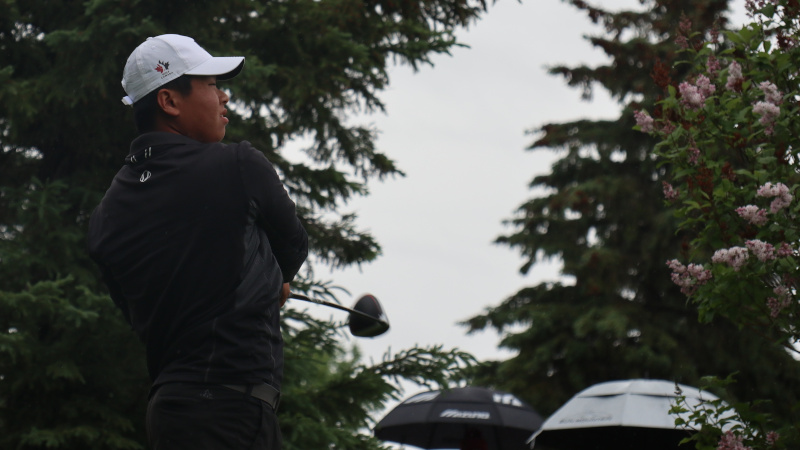
Saskatoon’s Josh Nagy stayed right in the hunt, the Riverside Country Club member shot 74 Saturday, couple that with his first round of 73 and Nagy is at three-over par in third place.
Neel Soni of Winnipeg is within striking distance at plus-five, Estevan’s Chase Gedak is still in the hunt as well after being in second place after the opening round. The TS&M Woodlawn player from Estevan sits in sixth at seven-over.
The boy’s leaderboard can be found here, their tee times begin at 7 a.m.
The top five boys and top five girls (plus ties) will qualify for the national junior championships later this summer.
Dou; Yang; take early leads at Prairie Championship

Round one of the Future Links Prairie Championship, driven by Acura is complete at Yorkton’s Deer Park Golf Course.
Calgary’s Richard Dou set the pace on day one of the three round event with a two-under par, 70. The Pinebrook player scattered five birdies over his round to stake a three-shot lead over a pair of Saskatchewan golfers. Saskatoon’s Josh Nagy of the Riverside Country Club (below, right) and Chase Gedak (Estevan, TS&M Woodlawn) each carded rounds of 73, one-over.
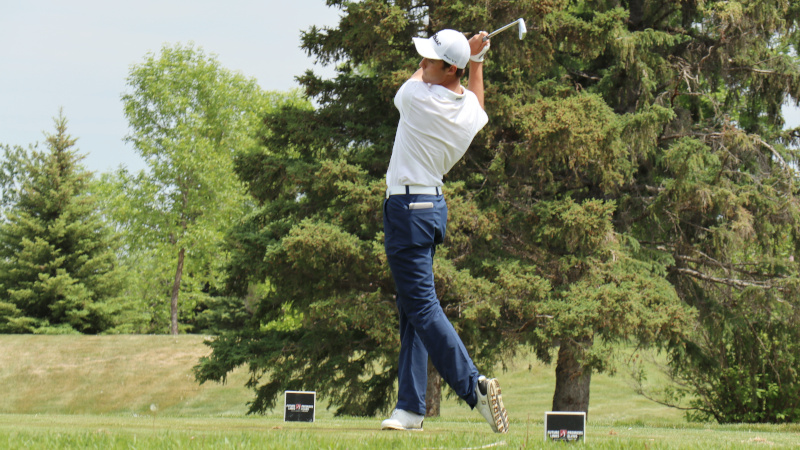
Tae Kyoung Yun, of Richmond Hill, Ont. and Carson Rody, also of Calgary are tied four fourth at two-over.
18 Saskatchewan boys are in the field; the complete leaderboard can be seen here.
On the girl’s side, Sherri Yang of Richmond, B.C. will sleep on a round one lead. The Mayfair Lakes Golf Club member has a two-shot edge on fellow British Columbian Hyeji Yang. Sherri shot one-over 73, Hyeji posted a solid 75, plus-three.
Calgary golfer Brooke Frerichs is in third at plus-five, Ashley Chow is fourth at eight-over, Abby Chow rounds out the top five at nine-over par.
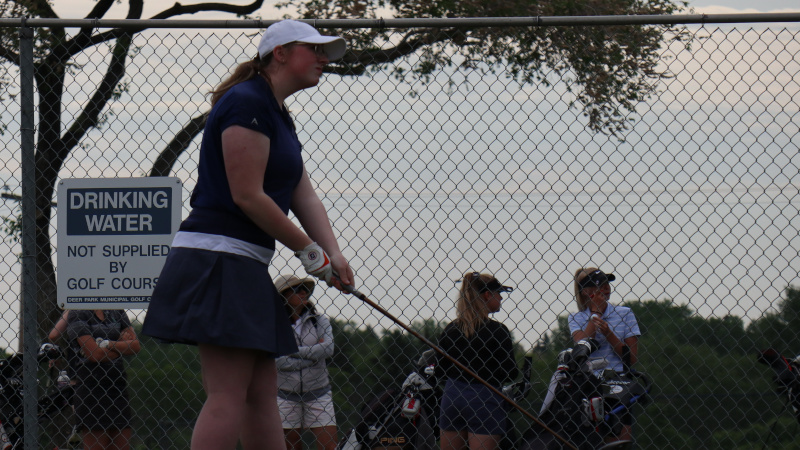
Six Saskatchewan girls are competing in the 54-hole tournament, Creighton’s Lauren Fox (left) leads the way of locals in sixth. She shot a 10-over, 82.
For a complete list of the girl’s leaderboard click here.
Round two will begin at 7 a.m. Saturday in Yorkton. The final round goes Sunday.
The top five boys and top five girls (plus ties) will earn a qualifying spot at the national junior championships.
Saskatchewan’s golf history; The 1950’s

1950 – Canadian Amateur and Junior Golf Championships, Saskatoon Golf and Country Club, July 15-22
The first Canadian golf championship held in Saskatchewan took place at the Saskatoon Golf and Country Club July 15-22 with 105 competitors taking part. The club worked hard preparing the course, renovating the clubhouse and looking after all the details for a successful national event. The course was set at 6,681 yards par 70. The Willingdon Cup teams and provincial junior teams of two were entertained at a Board of Trade luncheon on Friday and a banquet at the Bessborough Hotel on Saturday attended by Premier T.C. Douglas and Mayor J.S. Mills.
In the final amateur match Bill Mawhinney of Vancouver met Nick Weslock of Ontario. Weslock had five stymies during the day including one on the tenth hole in the morning round when he knocked Mawhinney’s ball into the cup. Opposition to the stymie rule had been building and it was hoped that there would be a change when the rules were next revised. Mawhinney won the Amateur Championship 6 and 5. Ontario’s team won the Willingdon Cup with Saskatchewan placing fifth out of eight teams. The Junior Championship was tied at 152 after 36 holes and Doug Silverberg, AB won an 18-hole playoff to claim the title. Saskatchewan’s Junior champion Pat Cassidy took fourth place, having the advantage of playing his home course.
1950 Men: Riverside Country Club, July 10-13
Dr. Bob Reid won the Saskatchewan Amateur for the fourth time. The best sand green player in the qualifying round was Rudy Homenuik who also won the Juvenile competition and was runner-up in the Junior.
The SGA annual meeting voted to run future Willingdon Cup trials over two days instead of four, still playing 72 holes. The previous year’s balance sheet showed a profit of over $700 which was the best year ever for the organization.
The 1950 Senior Men’s Provincials were held at the Regina Golf Club ending on August 11. A unique situation in tournament play featured a final with two left-handed competitors. A.E. Neville won 2 and 1 over Arthur Baird, becoming the first left-hander to win in the 24-year history of the senior tournament. Fourteen of the forty-two competitors were from out of town, including C.R. Moore – a former Regina resident now living in Los Angeles who tied for low gross. The oldest golfer was A.W. Irwin, an 82-year-old from Moose Jaw. A new slate of officers was elected, headed by president J.R. Smith of Regina.
1950 Women: Moose Jaw Willowdale Golf Club, August 7-11
Mabel Palko claimed her third provincial title when she won 2 and 1 over her Saskatoon Golf and Country Club mate Phylis Barclay. Her other two titles were in 1939 and 1947 and she was runner-up four times. Those two were on the Saskatchewan team along with Rene Robins of Wascana qualifying for the team for the fourth straight time, and Helen MacDougall of Riverside making the first of her five straight team appearances.
1951 Men: Wascana Country Club, July 18-22
It was an eventful week for Gordon Beattie who was elected president of the Saskatchewan Golf Association at the annual meeting. He was the first-round medalist but had to withdraw from further competition after his young son was in a serious farm accident. However, he was placed on the Willingdon cup team and made the trip to Ottawa with Moe Young, Boy Ashworth and Cliff Soberg. Harry Burns claimed his third Saskatchewan Amateur title after a gap of eleven years, winning the final over Ian Ross, the young son of Regina Golf Club professional Tom Ross. Ray Marsh of Moose Jaw won the junior title.
1951 Women: Prince Albert Golf Club, July 9-13
Phylis Barclay of the Saskatoon Golf and Country Club finished first in the Monday qualifying round of provincials with Joanne Goulet of Regina’s Gyro Club in second place. These two met on Friday in the championship final with Barclay prevailing 3 and 2. Both qualified for the Saskatchewan team along with Helen MacDougall of Riverside CC and Mrs. McQuarrie of Prince Albert and travelled to the Canadian competition in Montreal.
Hoping to encourage young players the first Junior girls’ competition was held in conjunction with the women’s provincials. Gerry Evans won the title at age 16, the first of four she would win in the six years she was eligible for the under-21 event. Sandra Hay of Riverside was the runner-up.
Interest in golf was growing and 943 members in thirteen clubs were now affiliated with the Saskatchewan Section of the CLGU.
1952 Men: Waskesiu Golf Club, July 7-12
Waskesiu was the provincial tournament site July 7-12 and newspaper reports included both the golf and fishing prowess of the competitors. Even though Dr. Bob Reid of Prince Albert had been out of golf for a year he practiced when had time and entered the tournament. Using his father’s clubs, as he liked those irons better than his own, he won the Saskatchewan Amateur for the fifth time. Ross Reibling scored a hole-in-one during the Willingdon Cup team trials but still ended up in fifth place, making him a team alternate.
At the SGA annual meeting, the treasurer reported a sound financial situation with a surplus. A committee was formed to organize a new junior program with money available from the RCGA junior development fund. The province was divided into four zones with the best players in each participating in clinics held by local pros.
Professional Competition: Pat Fletcher, SGCC pro, won the Canadian PGA championship with 210, three strokes under par over 54 holes on Winnipeg’s Niakwa course.
1952 Women: Riverside Country Club July 14-18
Riverside was turned into the “Golfers’ Gulch Hotel” for a Klondike-themed evening of costumes, skits, music and singing waiters for the final evening of the tournament. After such a fun evening the golfers playing in the finals had to get up and compete the next day. The championship match was decided on the nineteenth hole when Joanne Goulet of Regina’s Gyro Course won over Helen MacDougall who was playing her home course.
A report at the annual meeting of the CLGA Saskatchewan Section listed thirteen affiliated clubs and five members who had handicaps of six or under.
The second annual Junior Girls’ title was won by Gerry Evans with 185 over 36 holes. Her sister Lynne Evans tied with Joanne Goulet for second place at 193 but lost the 18-hole playoff the next day.
1953 Men: Regina Golf Club and Wascana Country Club, July 1-5
Regina Golf Club hosted the provincial tournament although players had to contend with a large puddle of water on the tenth fairway which had overflowed from a nearby creek. When it became impossible to play the back nine without getting wet to the ankles the tournament was moved to Wascana Country Club. A hailstorm interrupted some matches there requiring them to be finished the following day. When it was all over the youngest Saskatchewan Amateur winner since 1927 was crowned champion. Wilf Homenuik, 15 years of age, beat his 17-year-old brother Ted 4 and 2 in the 36-hole final. Wilf also won the Juvenile title and was runner-up to Ted for the Junior title. Both attended nationals in Montreal, Wilf as a member of Saskatchewan’s Willingdon Cup team and Ted as the junior champion.
At the SGA annual meeting, six honourary life memberships were awarded: Dunc Sinclair of Prince Albert, Russ Smith and N.C. Byers of Regina, Archie Trotter and J.D. Miller of Saskatoon, and Clem Alexander of Moose Jaw.
The SGA reported ten affiliated clubs with 1,541 members, an increase of 200 members since 1950.
1953 Women: Wascana Country Club, July 13-17
All competitors in team play were allowed to improve their lies with an extra stroke added for each round. When Joanne Goulet shot a par 77, she had to record a score of 78. It was a big upset when Joan Caswell, Saskatoon Riverside, eliminated Goulet in the quarter-finals. The champion was Rene Robbins with a 5 and 3 victory on her home course over Helen MacDougall of Riverside CC.
At the national Junior tournament in London, Ontario the CLGU organized a Western vs. Eastern competition with teams made up of a representative from each province. Gerry Evans took part as the Saskatchewan representative.
1954 Men: Saskatoon Golf and Country Club, July 7-10
Two members of Saskatoon GCC played for the championship title, with Morris Thompson winning over Ted Annear on the 35th hole. Two of the Homenuik brothers from Yorkton were in contention for the junior title, with Wilf edging out Ted by two strokes.
The SGA announced at its annual meeting that eight new clubs had affiliated this year. One committee was appointed to revise the constitution and another to select the Willingdon Cup team. Trophies were now going to be provided for the junior boys 15-and-under and 13-and-under events. The junior development program was financed by National Golf Day.
1954 Women: Waskesiu Golf Club, July 12-16
Waskesiu Golf Club hosted its first CLGU-Saskatchewan tournament in 1954. Four Saskatoon women claimed spots in the Championship semi-finals, with Gerry Evans of SGCC winning the title to add to the provincial junior title she won the week before. Gerry played on the Saskatchewan women’s team along with Joanne Goulet, Helen MacDougall and Rene Robbins, while Sandra Hay represented Saskatchewan on the Western junior team at Nationals.
1954 Canadian Open, Point Grey Golf Club, Vancouver, July 14-17
Pat Fletcher, Saskatoon Golf and Country Club’s 38-year-old professional, got off to a good start on the first day of the Canadian Open by shooting a 65. Bob Rosberg took the lead with a Point Grey tournament course record of 63. On the second day of competition Fletcher shot 70 and Rosberg 72, so the two were tied for the lead at 135. Day three’s leader was Gordie Brydson whose 68 put him at 207, ahead of Fletcher at 209 and Rosburg at 210. On the final day of competition Pat Fletcher was playing with an 8-iron borrowed from Stan Leonard of Vancouver. This 8-iron acted as a 9-iron for Pat whose clubs were calibrated a half-degree differently from most others. He birdied the 12th hole and his challengers were not playing well. When he sank a thirty-foot putt on the 17th for a birdie he felt he had the victory. He finished with a 72-hole total of 280. Golf enthusiasts in Saskatchewan were thrilled to hear of Pat Fletcher’s accomplishment but they could never have imagined that 64 years later they would still be waiting for another Canadian to win the Open.
1955 Men: Prince Albert Golf Club, July 20-24
Saskatchewan’s fiftieth anniversary as a province was celebrated when Prince Albert hosted the “Golden Jubilee Golf Championship.” For this occasion, the Amateur was held jointly with the Open and Professional championships which had been held separately over the last few years. Stan Leonard of Vancouver won the Open with 132 strokes and followed that up by winning the Professional title and pocketing $700 for his total of 269 strokes. An extra event was added to the program, a pro-am best-ball, which was won with a score of 63 by Harry Martel, an Edmonton pro partnering with Claude Shackell of Wascana.
For the first time in the history of the Saskatchewan Amateur the Champion was from out of province. Doug Silverberg of Red Deer, AB set a course record of 64 while playing the last eighteen holes of the championship and winning over Charles Bodzioch on his home course.
Qualifying for the Willingdon Cup team was an endurance test of six games over four different courses. In each game, the low scorer received eight points, graduating down to one point for eighth place. At the end, those with the most points were Kelly Carin, Wilf Homenuik, Dr. Bob Reid and Gordon Beattie and they represented Saskatchewan at nationals in Calgary.
1955 Women: Moose Jaw Willowdale, July 11-15
Heavy rains caused Spring Creek to flood the low parts of the Moose Jaw course making the last nine holes of Wednesday’s round unplayable, so competitors had to do two rounds of the front nine to get in their 18-holes. Joanne Goulet of Regina won the junior title over Gerry Evans of Saskatoon, but the women’s final featuring the same two young players had the reverse result with Gerry Evans winning 3 and 2. They were required to play on the women’s team at nationals so Sandra Hay and Lynne Evans represented Saskatchewan at the first junior team competition organized by the CLGU. This took place after two years of having a junior competition in which one player from each province played on the four-person East or West team (won both years by the East).
1956 Men: Moose Jaw Willowdale Golf Club, July 19-22
Young Bob (Rob) Kennedy was very much at home on the Moose Jaw course. He had been golfing in Calgary that summer and pocketed the Alberta Junior championship before coming home and winning the Saskatchewan Junior. It was believed he was the first two-province champion however he competed at nationals for his home province, Saskatchewan. In the Amateur final against Dr. Doug McAlpine of Wascana, Kennedy hit his sixty-foot approach shot into the hole for a birdie on the 26th hole. When he walked up to the hole and retrieved his ball from the cup without removing the pin, he was penalized and lost the hole. The rule at that time was that the pin had to be removed and the ball had to touch the bottom of the cup. This unnerved the youngster for the next few holes before he bounced back and evened the match on the 35th hole. McAlpine won the title on the final hole.
Phil Lederhouse won the first Western Canada Blind Golfers’ Tournament in Prince Albert.
1956 Women: Saskatoon Golf and Country Club, July 16-20
Gerry Evans won her third successive Saskatchewan women’s golf title in 1956 along with her fourth junior women’s title. Joanne Goulet was runner-up in the women’s event but was now too old for the junior event. The newspaper referred to her as a colourful Regina player who won her Wednesday match on the thirteenth green then finished the round in bare feet! Lynne Evans and Pat Kiggins from Yorkton were the Junior team.
1957 Men: Riverside Country Club, July 11-14
118 players, including 22 juniors, competed for the provincial championships. Del Wilson of Wascana defeated Herb Pinder on his home course for the amateur title.
At the SGA annual meeting Robert (Robbie) Robinson was presented with an engraved gold wrist watch to honour his service as Secretary-Treasurer of the organization from 1941 to 1957. A decision was made that only members of clubs affiliated with the SGA would be eligible to play in the amateur championships. In future, juniors would be required to show birth certificates as proof of age. Junior records for 1954 and 1955 were revised regarding Wilf and Ted Homenuik. A committee was formed to work out financial agreements between the SGA and clubs hosting the amateur and open tournaments.
1957 Women: Regina Golf Club, July 8-12
Sixteen-year-old Patricia Kiggins from Yorkton was the story of the 1957 women’s championship. She won the junior competition by 17 strokes over Mona Finlayson of Prince Albert. Then, she qualified as one of the top three in the women’s team trials. She continued to play well all week even though she had not played on grass greens this year prior to the competition. In the women’s final Joanne Goulet made short work of Pat’s winning streak, finishing her off on the thirteenth green. Pat and Mona were the Saskatchewan junior representatives to nationals in Montreal, while Joanne Goulet and Mesdames Oliphant, Glass and Balmos made up the women’s team.
1958 Men: Wascana Country Club, July 10-13
A dilemma occurred after the qualifying round in the men’s amateur when eight golfers shot 79, the cut-off mark for the 32 spots available in the championship flight. A playoff was held to determine the final four spots but Merv Folk of Saskatoon GCC was playing in the second round of the junior competition that afternoon and couldn’t participate. After three playoff holes, three golfers were eliminated and the championship flight was set. It included both Merv’s father, Alex Folk, and his younger brother, Ron. The final round was played in high winds, steady rain and some hail. Ultimately, Dr. Doug McAlpine won the title on the 37th hole over his young Wascana clubmate, Bob Stovin.
A prize was awarded after the qualifying round to the golfer with the best score who played at a sand-greens course. During the 1950s this was frequently won by one of the Homenuik brothers from Yorkton but also included others from around the province.
1958 Saskatchewan Open Championship, Riverside Country Club, July 26-27
The Saskatchewan Open title went to amateur Doug Silverberg of Calgary with a three-round score of 215. Vern Mohs, one of 15 pros, was one shot back and took home the $500 cash prize. Seventy-eight amateurs competed, including Dr. Bob Reid of Prince Albert who received permission to use a bicycle to travel around the course. This event was chaired by Jack Heywood with Ed S. Ross serving as Secretary-Treasurer. (Reference: pamphlet of the event is in Saskatoon Public Library Local History Room, PM2008-89)
1958 Women: Saskatoon Golf and Country Club and Wascana Country Club, July 7-15
With the National Women’s Championships scheduled for Saskatoon in August, the CLGU Saskatchewan section executive decided that the team trials and individual provincial championship would be a four-round competition. After two rounds at Saskatoon GCC and two rounds at Wascana CC, Joanne Goulet was declared champion with 327 and Barbara Turnbull, making her debut on the provincial scene, was runner-up with 343. Filling out the team was Phylis Barclay, 344, and Flo Short, 349. The junior competition was held in Saskatoon with Bonnie Phillips declared the winner at 168 and Patricia Kiggins of Yorkton at 174.
1958 Canadian Women’s Championship, Saskatoon Golf & Country Club, August 1-9
This was the first time that a Canadian women’s championship was held in Saskatchewan. Mrs. Phyllis Trotter, president of the Canadian Ladies’ Golf Union, and her tournament committee planned many social events to go along with the golf competition during the ten days at the Saskatoon Golf and Country Club. Marlene Stewart Streit at age 24 won her fifth Canadian championship defeating Mary Gay of Calgary 8 and 6. Gail Harvey won the junior championship and Ontario won both women’s and junior team competitions.
1959 Men: Saskatoon Golf and Country Club, July 9-12
The Canadian Junior Championship was newly organized and Saskatchewan sent a team of four to Montreal consisting of junior champion Ed Ross, runner-up Jim Scissons, Pete Lukoni and Merv Folk.
Keith Rever of Wascana received a watch as his amateur championship prize after defeating Jack McLellan of Saskatoon Golf and Country Club 7 and 6.
The Saskatchewan Seniors’ Golf Association held their tournament at Riverside Country Club July 13-14. Al Marcroft, SGCC, won the championship 1 up over Hon. J.H. Sturdy of Wascana, while Jack Wakeford won the low net trophy for those over age 65 just two weeks short of his 85th birthday.
At the SGA annual meeting a new constitution established a directorate made up of representatives from the two Saskatoon clubs, two Regina clubs, Moose Jaw, Prince Albert, North Battleford, Swift Current, Estevan and Nipawin, all representing the other clubs in their districts. A discussion was held on whether juniors could play in trials for both the Junior and Willingdon Cups, and a committee of two was appointed to select the junior team. The SGA decided to purchase small cups as mementos for Willingdon Cup team members. The treasurer reported that the association was in a sound financial situation.
1959 Women: Prince Albert Golf Club, July 1-17
Gerry (Evans) Yoos and her longtime provincial rival Joanne Goulet met in a closely fought final which Joanne lost after hitting her second shot on the eighteenth hole out-of-bounds. The match finished with Gerry winning her fourth provincial crown 2 up. Gerry, Joanne and Barb Turnbull were joined on the Saskatchewan team by Junior champion Pat Kiggins who qualified for the women’s team. Sisters Coralie and Bonnie Phillips from Saskatoon GCC made up the junior team.
This publication is produced by Saskatchewan golf historian Lori Harvie.
Western Canada’s best junior golfers converge on Yorkton

Over 60 of the best junior boy and girl golfers across Western Canada will tackle the Deer Park Golf Course in Yorkton this upcoming weekend.
The Acura Future Links Prairie Championship returns to Saskatchewan this year. The event rotates between Manitoba and Saskatchewan each year. 17 girls and 46 boys will make up the field that tees off for the 54-hole championship on Thursday beginning at 7 a.m.
Regarded as one of Saskatchewan’s top-ranked 18-hole golf courses, Deer Park Municipal Golf Course’s already challenging terrain is dotted with numerous water and sand areas.
“Golf Canada and Golf Saskatchewan are delighted to present the 2019 Future Links, driven by Acura Prairie Championship at such a terrific venue,” said Steve Ryde, the tournament director and Sport Development and Championships Manager with Golf Saskatchewan. “We are confident Deer Park Municipal Golf Course will challenge Canada’s premier junior golfers as they showcase their skills.”
The top five boys will earn exemptions into the 2019 Canadian Junior Boys Championship Aug. 11 to 15 at Covered Bridge Golf & Country Club in Hartland, N.B. Should there be a tie for the fifth position, a playoff will be conducted following the conclusion of play.
The top five girls (including ties) will receive an exemption into the 2019 Canadian Junior Girls Championship July 29 to Aug. 2 at Lethbridge Country Club in Lethbridge, Alta.
The Saskatchewan players are listed below:
- Lauren Fox, Creighton
- Brooklin Fry, Shell Lake
- Sarah Grieve, Saskatoon
- Ella Kozak, Yorkton
- Carey McLean, Deer Valley
- Autumn Neiszner, Regina
————————————- - TJ Baker, Prince Albert
- Logan Chernoff, Estevan
- Ryan Chernoff, Estevan
- Parker Dale, Saskatoon
- Tommy Danielson, Saskatoon
- Will Danielson, Saskatoon
- Steven Duchscher, Saskatoon
- Colby Friedrich, Battleford
- Chase Gedak, Estevan
- Darien Herlick, Weyburn
- Adam Husli, Regina
- Cole Jenkins, Prince Albert
- Hunter Kutcher, Regina
- Josh Nagy, Saskatoon
- Alex Swinnerton, Saskatoon
- Carter Timmerman, LeRoy
- Cort Tunall, Kindersley
- Jackson Wingert, Saskatoon
All the details and live scoring can be found here.
Ziglo outduels wind and women at Saskatoon Ladies Open

Saskatoon’s Kathy Ziglo has gotten off on the right foot this golf season picking up a win in her debut Order of Merit Tour (OMT) event this past weekend.
The Saskatoon Golf and Country Club member battled the blustery elements over 36 holes at Dakota Dunes Golf Links holding off a trio of ladies in second place to win the Saskatoon Ladies Open. Ziglo was the lone golfer in the 38-player field to break 80 during round one on Saturday. She shot a 77 on the opening day. Ziglo said her everyday game is suited for windy Saskatchewan days.
“It was consistently three clubs, sometimes even four,” she said. “I am blessed sometimes; I have a low ball flight so I generally play the wind well. Everything I did wrong was with my short, my mistakes were not element based.”
With a six-stroke lead over Autumn Neiszner going into the second round Ziglo knew she needed to be consistent to potentially win the championship.
“I was struggling to find some intensity to hold onto, Sunday was a battle of attrition,” she said of her second round 82. “I knew from playing behind Kim (Brown) and them that no one was making a move up the leaderboard, so I knew if I got in without major mistakes I was good. I limited my mistakes. I didn’t have any bad holes, I just had blah holes. I bogeyed myself to death.”
Ziglo, a long-time golfer who got her start at Deer Park in Yorkton earned 500 points on the women’s OMT with the win. Neiszner, Carrie Lambden, and Brown all tied for second at plus-25, ten strokes back of Ziglo. The trio each earned 350 OMT points. Regina’s Kim Walker placed fifth at plus-28. Despite competing in the amateur women’s division, Neiszner was was awarded the junior women’s plaque.
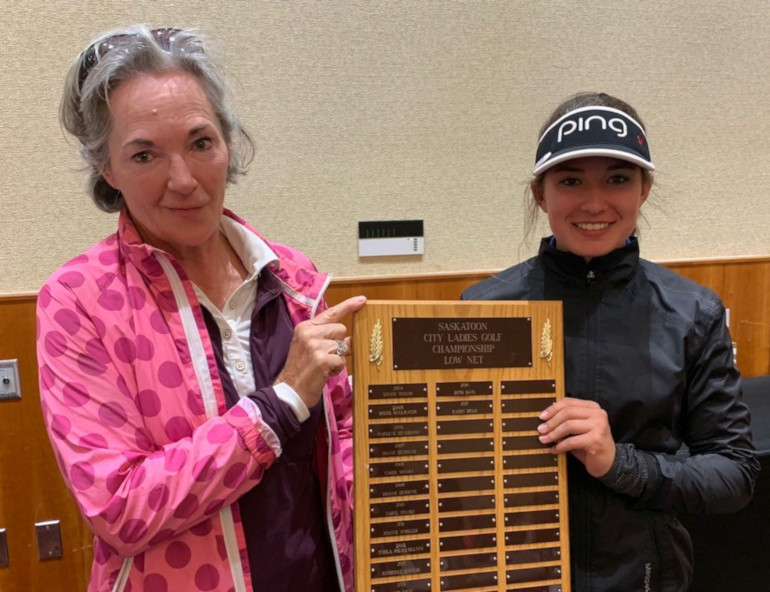
Brown leads the early season OMT race with 850 points, Ziglo is next thanks to the win. She said getting off to a good start feels good ahead of the women’s amateur in a couple weeks.
“It’s always nice to get one early because you never know when you get older to see if you still have it or not,” Ziglo chuckled. “It’s good when you can come out and shoot a good score, it was good.”
Ziglo will be back in the women’s amateur field this year after taking a year off. The event runs from July 3 to 5 at the Moon Lake Golf and Country Club.
Click here to register or find all the results and current standings from the women’s OMT.
Prince Albert’s Cooke Municipal Golf Course reaping the rewards of irrigation upgrade

A massive overall of the Cooke Municipal Golf Course’s (CMGC) irrigation system is paying off in waves for the 110-year-old club.
In the works for an estimated 10 years, a $2.4 million upgrade was completed last fall. According to CMGC head professional Darcy Myers, the renovations could not have been more successful.
“We couldn’t be happier,” Myers said to Golf Saskatchewan. “Start up this spring we turned our water on at the end of April with no issues whatsoever. We were able to get water to all the necessary areas to get things opened up. We continually see improvements in the turf conditions everyday.”
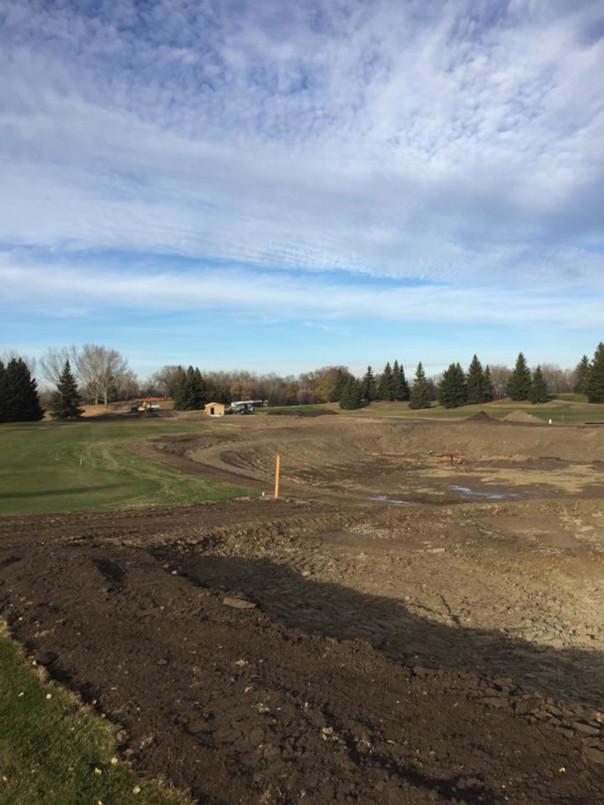
The Cooke is owned by the city of Prince Albert so the funding for the project needed to be approved by city council. Work was started in the fall of 2017 and took about a year to complete.
“Our existing irrigation was well past it’s life expectancy, we were continually fighting breaks and broken sprinklers,” Myers explained.
Myers said with the water system working spotlessly the groundskeeping crew at the course can focus on regular maintenance and enhancing other parts of the 18-hole facility. Costs are also down due to more efficient use of the water. He said they expected a trickle-down effect, but the benefits have exceeded their expectations.
“We were hoping for it but to see it come to fruition we couldn’t be happier. This was some short-term pain for a long-term gain. It’s just going to get better in the future,” he said.

During the process crews tripled the capacity of the course’s retention ponds on holes three and five. A new green was constructed on hole five and a couple holes were altered as part of the work. Several tee boxes were revamped too.
The CMGC is a unique club because they are partnered with the Prince Albert Curling Club. The facility is utilized by residents of the city 365 days a year. Myers said the members, visitors, and staff are pleased to see council recognize the importance of the year-round recreation site.
“It’s a busy facility,” he said. “We’re 110 years old this year so you have to put some money back into the course to keep it moving forward. It’s been a long time coming but we’re happy where we are right now.”
The CMGC recently hosted the Ladies Northern event to positive reviews. Next up on their schedule is the Adult-Junior Scramble on June 15.
Carlisle; Kozak play well at Future Links Western Championship

Ella Kozak continued the strong start to her golf season with an 11th place showing at the Future Links Western Championship earlier this month.
Kozak, 13, shot three consistent rounds of 79 at Wolf Creek Golf Course in Ponoka, Alta. to finish at plus-24. Kozak’s 54-hole stats include four birdies, 28 pars, 17 bogeys, four double-bogeys and a tough seven on a par four during her first round.
Kozak is now preparing for this week’s Future Links event at her home course, Deer Park in Yorkton.
Estevan’s Jace Carlisle (pictured) was in the boy’s field at the event that ran from May 31 to June 2. The TS&M Woodlawn member, and employee finished in 21st place at 231 (76, 82, 73). The 17-year-old’s card consisted of one birdie, 38 pars, 12 bogeys, a pair of double-bogeys and a seven on a par four during round two.
Carlisle will not be in the field during the Acura Prairie Championship due to his graduation from Estevan Comprehensive School on Friday.
Six Sask. golfers compete at MJT event in Red Deer

Four Saskatchewan based golfers attended a Maple Leaf Junior Golf Tour (MJT) event in Red Deer, Alta. on the weekend.
Saskatoon’s Micah Tangjerd, 17, placed seventh in the junior boy’s category. Tangjerd shot 169 (84, 85) over the two-day event at River Bend Golf Course. He was also the closest to the pin winner in his age group.
Three 16-year-old players were in the juvenile boy’s field as well. Taylor Lofgren, also of Saskatoon shot rounds of 84 and 86 to place 13th in the category. Eastend golfer Rylan Egland placed 19th at 193 (93, 100) and Morgan Prefontaine of Shell Lake came in 20th with 197 (102, 95).
At the MJT Mini Tour event, also held at River Bend nine-year-old Lucas Sturgeon of Saskatoon placed fifth in the boys 9-10 age group. Sturgeon shot 90 during the one-round event. Jace Egland, 11, of Eastend also shot 90, he finished fourth in the boys 11-12 age division.
The next Saskatchewan tournament on the MJT schedule is in Swift Current at the Chinook Golf Course on June 22 and 23.
Rory McIlroy wins 2019 RBC Canadian Open

HAMILTON, Ont. — Using a loonie as his ball marker, Rory McIlroy fired a final round 9-under par 61 to win Canada’s National Open Championship, the RBC Canadian Open in his first appearance.
McIlroy’s 22-under-par 258 is the lowest 72-hole score ever carded at the RBC Canadian Open. The previous record of 263 was held by Johnny Palmer (1952), Scott Piercy (2012) and Tim Clark (2014). His final round 61 is also the best final round at the 110-year-old event, breaking the record of 62 held by Andy Bean (1983).
The 30-year-old entered Sunday’s final round sharing the lead with Americans Matt Kuchar and Webb Simpson. He started his round by lipping-out a chip for eagle on the first hole, en route to birding four of his first five holes. With the win the Northern Irishman claimed his 16th PGA TOUR title.
“It’s been a while since I played like this and sort of put my foot down, but it was so nice to do it today,” said McIlroy. “I’m very proud of what I’ve done today. Hopefully this sets up well for the rest of the year, too.”
McIlroy becomes only the sixth player to win the career Triple Crown, having won the U.S. Open in 2011 and The Open Championship in 2014. He joins an exclusive club that includes Tommy Armour, Walter Hagen, Arnold Palmer, Lee Trevino and Tiger Woods.
“The reception from the Canadian crowds have been incredible this week,” added McIlroy. “They couldn’t have been any better. They’ve been so welcoming all week. I can’t wait to come back next year.”
McIlroy is the first golfer to win the RBC Canadian Open on his first attempt since Chez Reavie in 2008 and the first European to capture the title since Sweden’s Carl Pettersson in 2010.
Ireland’s Shane Lowry and American Web Simpson finished tied for second at 15-under par 265 for the tournament. Americans Matt Kuchar and Brandt Snedeker finished tied for 4th at 13-under.
Adam Hadwin fired an even-par 70 in the final round, finishing as the low Canadian at 12-under par 268 on the tournament. Hadwin was awarded the Rivermead Cup for the fourth time of his career as low Canadian.
“The crowd was amazing all week,” said Hadwin. “That reception coming up 18 was something special. I pictured it with being a few more [strokes] under earlier in the week, but they were amazing. I’m just disappointed I couldn’t get it done in front of them.”
By virtue of his sixth-place finish, Hadwin qualifies for the 2019 Open Championship being held July 14-21 at Royal Portrush in Northern Ireland. Also earning an exemption in the 2019 Open Championship was Northern Irishman Graeme McDowell. New for 2019, the RBC Canadian Open is included in The Open Qualifying Series. Up to three players who are not already exempt earned places in the 148th Open Championship at Royal Portrush
The 2020 RBCCO is being held at St. George’s Golf and Country Club in Toronto from June 8 to 14.
Click here to view the full leaderboard for the 2019 RBC Canadian Open.
Organizers’ plan to elevate profile of RBC Canadian Open succeeds

ANCASTER, Ont. – Golf Canada’s plans to elevate the RBC Canadian Open have paid off.
Laurence Applebaum, Golf Canada’s CEO, called the 2019 edition of the tournament a success on Sunday, even as the national sport organization was still adding up its figures.
“I can categorically say that the RBC Canadian Open 2019 will be a record year,” said Applebaum at a morning news conference before most pairings had teed off in the final round of the national championship. “It’s going to be a record on basically every single metric we look at.”
Golf Canada reported a 65 per cent increase in attendance, a total of approximately 120,000 people over seven days. Beer sales, always a point of pride for the only Canadian stop on the PGA Tour, doubled from last year’s event at Glen Abbey Golf Club in Oakville, Ont.
Setting the stage for a thrilling Sunday finish at the #RBCCO
Tickets ➡️https://t.co/7mfBsjhFcY pic.twitter.com/ZoSzqMSSUn
— RBC Canadian Open (@RBCCanadianOpen) June 9, 2019
That growth was part of a plan initiated by Golf Canada, lead sponsor RBC, and the PGA Tour, to raise the RBC Canadian Open’s profile.
The overall purse was increased to US$7.6 million for 2019, up from $6.4 million. The date was also moved from late July to the first week of June, a more advantageous position in golf’s calendar, a week before the U.S. Open instead of a week after the British Open.
A pair of concerts were added to the event, with country music stars Florida Georgia Line playing on Friday night and Kingston, Ont., rock group the Glorious Sons performing on Saturday night.
“I think we saw on Friday and Saturday that music and golf do work together,” said Mary DePaoli, executive vice-president and chief marketing officer for RBC. “Anecdotally there were so many people that came to hear music but got here early to see some golf.”
The Hamilton Golf and Country Club hosted the Canadian Open for the first time since 2007. It will welcome the national championship in 2023. St. George’s Golf and Country Club in Toronto will hold the event in 2020 and 2024, with the hosts for 2021 and 2022 expected to be announced by the end of this year.