


Still playing this fall? Here’s when your scores count
What Canadian golfers need to know about the end of the active season, winter golf trips and tracking indoor rounds.
There’s still time for at least one more round outdoors. But will that round count toward your Golf Canada Handicap Index?
As the active season ends across much of Canada, the answer depends on where and when you play.
Whether you’re squeezing in a final round at home, packing your clubs for a winter getaway or heading to a simulator, here’s what to know about recording your scores.
What is the active season?
The active season is the period when acceptable scores from courses in a particular area must be submitted for handicap purposes. Provincial golf associations establish these dates, which vary across Canada.
Scores from rounds played during a course’s inactive season do not count toward handicap calculations. Seasonal conditions can make a course play differently from the conditions reflected in its course and slope ratings. Learn more about active seasons.
A course can remain open after its active season ends. You can still enjoy a round, but that score won’t count toward your handicap index.
When does the active season end in my province?
A list of the following active seasons:
| Province | Active season |
|---|---|
| British Columbia | March 1 to Nov. 15 |
| Alberta | March 1 to Oct. 31 |
| Saskatchewan | April 15 to Oct. 31 |
| Manitoba | April 15 to Oct. 31 |
| Ontario | April 15 to Oct. 31 |
| Quebec | April 15 to Oct. 31 |
| New Brunswick | April 21 to Oct. 31 |
| Nova Scotia | April 15 to Oct. 31 |
| Prince Edward Island | April 16 to Nov. 14 |
| Newfoundland and Labrador | April 1 to Nov. 30 |
Some courses in British Columbia’s Lower Mainland and on Vancouver Island may observe a year-round active season. Check with the course or provincial association if you’re unsure about its status.
Heading somewhere warmer? Keep posting your scores
Your home club’s inactive season ending doesn’t mean scores for rounds at all courses won’t count towards your handicap index.
If you belong to a club in Ontario and play in Florida in January, you must submit an otherwise acceptable score. Florida observes a year-round active season, so those rounds count even while your home course is closed for winter.
Before your trip, check the active season at your destination with the course or local golf association. Warm weather alone doesn’t determine whether a score is acceptable. Many southern U.S. destinations have year-round active seasons, but confirm before you play. Read Golf Canada’s winter score-posting guidance.
After each round, post your acceptable score through the Golf Canada App or online Score Centre. Select the course and tees you played and submit the score as soon as possible that day, before midnight local time. Golf Canada automatically accounts for the course’s active season.
If you maintain both Canadian and U.S. scoring records, make sure all acceptable scores appear in both. Golf Canada can help link Canadian and USGA accounts so scores transfer automatically. Contact members@golfcanada.ca for assistance in setting this up.
Those winter rounds can change your Golf Canada Handicap Index.
Taking your game indoors? Keep tracking it
If you’re heading to a simulator this winter, use the Golf Canada App to record your indoor rounds and practice sessions at participating Golf Canada member facilities. It’s a useful way to track your indoor game, follow your progress and stay focused on your goals until spring. Learn about indoor tracking in the app.
Indoor scores do not count toward your Handicap Index. They still give you a record of your simulator rounds, whether you’re working towards a scoring goal, playing in a winter league or enjoying a game with friends.
The Golf Canada app is available as a free download from the App Store and Google Play. Download the app.
Does every outdoor round during the active season count?
The active season is one requirement. The round must also meet the other conditions in the Rules of Handicapping.
These include playing an authorized format, completing the required minimum number of holes, playing in the company of at least one other person and following the Rules of Golf. The course must also have current course and slope ratings.
If you’re unsure whether a round qualifies, ask your club’s handicap committee or see the Rules of Handicapping.
What should I do before the season ends?
Review your scoring record for missing rounds and ask your club for help correcting any omissions or errors.
For your remaining outdoor rounds, submit acceptable scores as soon as possible on the day you play, before midnight local time. That allows your score to be included in the playing conditions calculation and your handicap index to be updated for the following day. Find score-posting guidance.
Wherever you play this winter, keep the Golf Canada app handy. Post acceptable outdoor scores while travelling and record your indoor rounds to keep tracking your game until spring.
Light week on collegiate schedule as fall season winds down
It was a much lighter schedule this week for Saskatchewan student-athletes south of the border.
Chloe Wills of Kyle continued her outstanding season with the Drury University Panthers this week with another top 10 finish. Drury was in Caseyville, Illinois on Oct. 19 and 20th for the McKendree Bearcats Dual Gender Invite at Far Oaks Golf Club. The Saskatchewan Landing Golf Resort member posted rounds of 78, 72, and 74, good enough for a tie for seventh place overall.
The Panthers were third overall in the team category as they wrapped up the season and will now return to action in March.
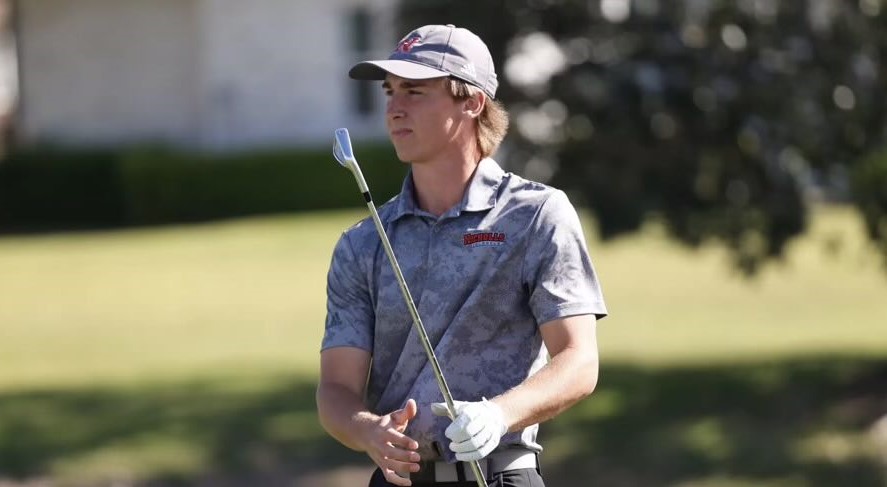
Chase Pochylko of Saskatoon saw his first on course play of the season this week after battling a foot injury for most of the fall. Pochylko and the Nicholls State University Colonels were at the LaTour Golf Club in Matthews, Louisiana for the LaTour Intercollegiate on Oct. 1 and 20.
Competing as an individual, he signed for rounds of 80, 71, and 81 to place tied for 45th. His Nicholls teammates closed the season with a third place finish out of nine schools.
Saskatoon native Justin Miller has also had a stellar campaign after transferring from junior college to NAIA school Tabor College. The Bluejays were in Dodge City, Kansas on Oct. 18 to 20 for the KCAC Matchplay Championships. The competitors played an 18-hole event first, Miller scored 76 and placed tied for 15th.
The following two rounds were matchplay, Miller defeated Christian Flint of York 3&2. In the third round he downed Malachi Meador of York 4&3.
In the end Tabor was ranked third out of 10 competing schools. The Bluejays are now done for the season.
Another Riverside Country Club member was also on the course down south this week as Ben Staines and the Mount Aloysius College Mounties were in action. Aloysius was in Altoona, Pennsylvania on Oct. 17 and 18 to close the season at the Penn State Altoona hosted at Sinking Valley Country Club. The Mounties had two teams competing, Staines was on the ‘B’ team that placed sixth overall. Staines was 29th with rounds of 80 and 85.
The Aloysius ‘C’ team was seventh.
There are still 10 Saskatchewan players with scheduled events before the season comes to a close.
MJT announces annual award and scholarship recipients for 2026
The Maple Leaf Junior Golf Tour (MJT) has awarded their annual players of the year and the recipients of over $70,000 in scholarships.
The Saskatchewan Order of Merit (OOM) champions for this MJT season are:
Under-15 Women | Alyxa Melsted (Wynyard) – Wynyard Golf Club
15 – 19 Women | Arwen Mosher (Saskatoon) – Riverside Country Club
Peewee Boys | Hudson Deibert (Regina) – Royal Regina Golf Club
Bantam Boys | Jace Munro (Swift Current) – Elmwood Golf Club
Juvenile Boys | Austin Nesbitt (Regina) – Wascana Country Club
Junior Boys | Oliver Matyczuk (Saskatoon) – Riverside Country Club
Mini Tour OOM champions:
9-10 Girls | Aria Shoffner (St. Denis) – Riverside Country Club
11-12 Girls | Kensi Bourassa (Saskatoon) – Saskatoon Golf & Country Club
Under-9 Boys | Aleksander Sierzycki (Prince Albert)
9-10 Boys | Jerry King Zhao (Regina) – Wascana Country Club
11-12 Boys | Caleb O’Brien (Melville) – Melville Regional Park Golf Course
Scholarship recipients:
Matty Schmiess (Swift Current) – Elmwood Golf Club
Ryker Gavelin (Rivers) – Golf Kenosee
You can see more details on the MJT’s Facebook page.
PGA of Sask. announces award nominees
The list of the nominees for the upcoming PGA of Saskatchewan awards was announced on their Instagram page Tuesday.
Below are the names of this years’ list:
Graham Coulter Head Professional of the Year
- Ryan Wells (Cooke Municipal Golf Course), Prince Albert
- Conner McGill (Valley Regional Park Golf Course). Rosthern
- Hannah MacNeil (The Willows Club), Saskatoon
- Brennen Gee (Saskatoon Golf & Country Club)
- Brad Lovatt (Wascana Country Club), Regina
- John Greenough (Deer Valley Golf & Estates)
- Paul Schatz (Waskesiu Golf Course)
- Geordie Miller (Riverside Country Club), Saskatoon
Peter Semko Executive Professional of the Year
- Marty Wheaton (Lloydminster Golf & Curling Centre)
- McLaren Taylor (Saskatoon Golf & Country Club)
- Darcy Myers (Cooke Municipal Golf Course), Prince Albert
- Craig Prentice (Wascana Country Club), Regina
- Mike Cyndroski (The Willows Club), Saskatoon
Class “A” Assistant Professional of the Year
- Chad Lavallee (Riverside Country Club), Saskatoon
- Jason Kim (Lloydminster Golf & Curling Centre)
Apprentice Professional of the Year
- Brandon Ho (The Willows Club), Saskatoon
- Dylan Bells (Wascana Country Club), Regina
- Brayden Nestman (Wascana Country Club), Regina
- Bryce Sebastian (Wascana Country Club), Regina
- Micah Tanjerd (Wascana Country Club), Regina
- Jon Warner (Deer Valley Golf & Estates)
- Tayden Wallin (Riverside Country Club), Saskatoon
- Aidan Shanks (Royal Regina Golf Club)
- Shawn Diacon (Royal Regina Golf Club)
- Chase Tippett (Wascana Country Club), Regina
- Nicholas Enns (Evergreen Golf Course), Nipawin
- Gray Lund (Elmwood Golf Club), Swift Current
- Cody Andrews (Lloydminster Golf & Curling Centre)
John Gaudet Teacher of the Year
- Zachary Taylor (The Willows Club), Saskatoon
- Mitch Bach (Clubhouse Golf), Saskatoon
- Clinton Schmaltz (Tour Path Academy), Saskatoon
- Cody Callaway (The Willows Club), Saskatoon
- Phil Jonas (Saskatoon Golf & Country Club)
- Patty Jonas (Saskatoon Golf & Country Club)
Coach of the Year
- Cody Callaway (The Willows Club), Saskatoon
- Jeff Chambers (JCG Academy), Swift Current
- Jason Schneider (JDS Golf), Saskatoon
Junior Leader of the Year
- Zachary Taylor (The Willows Club), Saskatoon
- Tayden Wallin (Riverside Country Club), Saskatoon
- Brayden Nestman (Wascana Country Club), Regina
- Cody Callaway (The Willows Club), Saskatoon
- Phil Jonas (Saskatoon Golf & Country Club)
- Jason Schneider (JDS Golf), Saskatoon
Retailer of the Year
- Brennen Gee (Saskatoon Golf & Country Club)
- Darcy Myers (Cooke Municipal Golf Course), Prince Albert
- Garrett McMillan (First Tee Indoor Golf Centre), Regina
- John Greenough (Deer Valley Golf & Estates)
- Brad Lovatt (Wascana Country Club), Regina
The winners will be announced on Thursday, Oct. 29 during the PGA of Saskatchewan Buying Show at Dakota Dunes Resort.
One year at Riverside – Golf Saskatchewan sits down with Geordie Miller

It’s been about a year since Geordie Miller has taken over for Earl Scott as the head pro at Riverside Country Club.
On Oct. 2, Golf Saskatchewan sat down with the 30-year-old to learn about his golf journey and the enticement of seeking the position.
Dukart humbled by WCC Hall induction
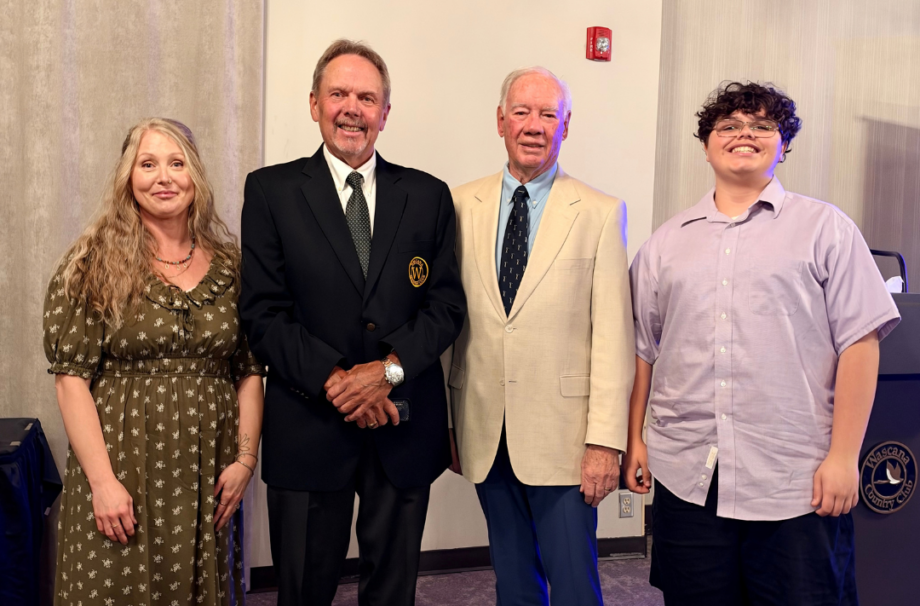
The Wascana Country Club (WCC) recently honoured Greg Dukart for his contributions to the course from his first playing days in the late 1960’s to his retirement as general manager.
Dukart was recently inducted into the WCC Hall of Fame in a ceremony at the club.
He spoke to Golf Saskatchewan about his incredible career, the 2018 CP Women’s Open, and the meaning of the induction.
Golf Saskatchewan Club Volunteer of the Year
Amateur sport organizations, such as Golf Saskatchewan depend highly on volunteers to keep operating.
We have board of directors, referees, course raters, and more many people from across Saskatchewan contribute to the game making it better everyday.
The same can be said for golf clubs across the province, the nation, and the globe. Volunteers put in countless hours at clubs every year. Whether its volunteering on rules committees, local boards, mowing greens, cleaning up after storms, or tending flowers, every hand helps keep our courses running.
That’s why Golf Saskatchewan is recognizing volunteers at clubs Saskatchewan wide!
If your club has an extraordinary volunteer(s) and you want them recognized, submit their story to us!
Send a photo and a description of what you nominee does for your club!
Each nominee will be awarded a Golf Saskatchewan prize pack and featured on our website as well as notoriety for the course, plus a province wide winner will be chosen as the 2026 Saskatchewan Golf Volunteer of the Year.
Please forward all nominations to CStork@GolfSaskatchewan.Org. The deadline is Jan. 31, 2027.
Can-West Championships feature plenty of Sask. players; Guenther earns two top 5’s
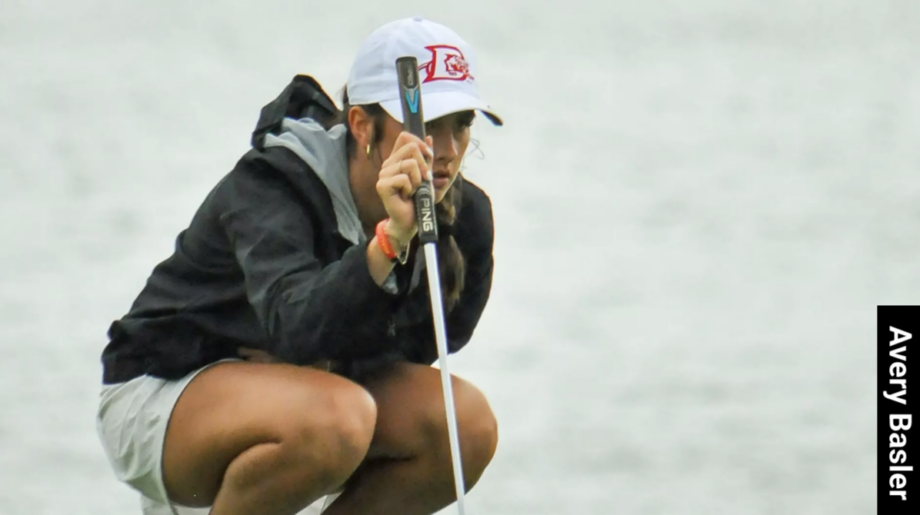
Saskatchewan had a strong contingent of players competing at the USports Canada West Championships at Paradise Canyon in Lethbridge on Oct. 4 and 5.
Reece Kuski of the University of Regina Cougars was the top local placing tied for 11th at 4-over par, 146. Fellow Cougar Jackson Wingert shot 9-over 151, he was tied for 22nd.
Dane Giesbrecht transferred to the University of the Fraser Valley and was in the field, he shot 17-over par, 159, that was 38th. Jordan Heller of the U of R was 41st at 164 (85, 79), Hudson Heistad also of the Cougars was 42nd (87, 79), and teammate Carter Bell was 43 at 169 (85, 84).
The Cascades were seventh as a team; the Cougars tied for eighth.
Caitlin McGregor of Swift Current was the lone Cougar competing in the women’s championship. She placed 33rd at 211.
South of the Border
The impressive fall season for Chloe Wills of Kyle at Drury University continued into October.
The Panthers were in Edmond, Oklahoma on Oct. 5 and 6 for the Grace Shin Invitational at the Golf Club of Edmond. Wills led the team with an eighth-place performance with stellar rounds of 73 and 71. The team was in 16th place.
From there Drury ventured to Springfield, Missouri for the Payne Stewart Memorial at Twin Oaks Country Club. The Panthers were the lone team of the dozen schools not Division 1 competing in the event. Again, Wills led the Panthers tying for 23rd carding back-to-back 78’s and an even par 71 in round three.
Drury was 12th. They conclude the fall season on Oct. 19 and 20 at the McKendree Bearcats Dual Gender Invitational in Caseyville, Illinois at Far Oaks Golf Club.
Ella Kozak has had a busy couple weeks with a pair of tournaments with the University of Idaho Vandals.
On Oct. 4 and 5 the Yorkton native was at the Tacoma Golf and Country Club for the Pat Lesser Harbottle in Lakewood, Washington. She signed for a 79 in round one, 75 in round two and a 74 in the final round to land tied for 59th place.
The Vandals were 13th out of 18 schools.
Niya Friesen of Swift Current was also in the tournament competing as an individual for Seattle University. She shot 85, 77, and 82 which was 98th place. Friesen’s teammates were sixth overall.
The Redhawks final fall event is the Route 66 Invitational in Broken Arrow, Oklahoma on Oct. 19 and 20.
The Golf Iconic Classic in Las Cruces, New Mexico was next on the schedule for Kozak on Oct 12 to 14 at NMSU Golf Course. She placed tied for 37th this week with rounds of 77, 72, and 74.
Idaho was 13th out of 19 schools in the event. That wrapped up the Vandals fall season.
The Lewis University Flyers hosted their home event this fall on Oct. 5 and 6. Saskatoon’s Sarah Henderson was competing for the Lewis ‘B’ team in the event. She tied for 46th place thanks to rounds of 85, 93, and 88. Her team was seventh out of 11, the Flyers ‘A’ team won the event.
Lewis has two tournaments left still with the Panther Fall Invite in Augusta, Michigan on Oct. 16 to 18 next on the slate at Stonehedge Golf Club.
Erika Davis’ first fall college season is complete with the Waldorf University Warriors. They were in Waterloo, Iowa, on Oct. 2 for a one-day event at Irv Warren Memorial Golf Course hosted by Hawkeye Community College. She carded a score of 102 and tied for 28th. Waldorf placed fourth out of six schools to close their season at the Redtail Classic.
The University of Providence with Regina’s Adam Husli at the helm continued their fall season with a pair of October events. First off, the Argos were Helena, Montana at the Bill Roberts Golf Club for the Fighting Saints Open on the 5and 6. He carded rounds of 74, 71, and 83 to tie for 29th overall. Providence was fourth out of eight schools in the team category.
The U of P returned home to host the Argo Invite at Eagle Falls Golf Club in Great Falls, Montana on Oct. 12 and 13. Husli signed for rounds of 86, 76, and 80 to place in a tie for 25th. The Argos were fourth.
That wraps up the fall season, Husli will now turn his focus to the Argo men’s hockey team schedule as he plays for that program too. The next game is Oct. 16 against the University of Montana.
Luke Cote and the Southern Arkansas University (SAU) Muleriders were in Andover, Kansas on Oct. 12 and 13 for the Newman Invitational at Terradyne Country Club. The Regina product led the team tying for ninth with rounds of 72, 69, and 74. SAU was 12th as a team.
The fall season will conclude Oct. 26 and 27 at the Tulsa Cup in Broken Arrow, Oklahoma at Indian Springs Golf Club.
Cole Taylor of Nipawin had a pair of events in the first half of October with the Park University Buccaneers squad. On Oct. 5 and 6 Taylor was in Hobbs, New Mexico at Antelope Hills Golf Course for the Battle in the Desert. Competing as an individual Taylor carded rounds of 72, 75, and 79 leaving him in a tie for 49th place. The Bucs team was ninth out of 17 teams.
From Hobbs the Bucs headed to Prescott, Arizona for the Embry-Riddle Fall Invite at Capital Canyon Club. Taylor shot 75 and 73 before rain forced a cancellation of the final round. He was 12th at the time of the calling of the event.
Next up is the OUAZ Sundance Shootout in Buckeye, Arizona at Sundance Golf Club on Nov. 2 and 3.
The Wheeling University Cardinals and Makstr McIntyre of Swift Current took part in the Bud Elwell Invitational on Oct. 11 and 12 at Whispering Woods Golf Club in Erie, Pennsylvania. The Elmwood Golf Club member posted back-to-back scores of 79 leaving him in a tie for 26th place.
McIntyre was on Wheeling’s ‘B’ team, they placed seventh. The Cards’ next event is on Oct. 19 to 21 in Farmington, Pennsylvania at Mystic Rock Golf Course.
Justin Miller saw his first action of October with the Tabor College Bluejays in Lawrence, Kansas at the Ottawa Braves Invitational on the 12th and 13th. The Saskatoon resident carded rounds of 82, 77, and 83 leaving him in a tie for 36th.
The Bluejays were seventh out of 10 teams. Tabor hits the road to Dodge City, Kansas on Oct. 18 to 20 for the KCAC Match Play Championships at Mariah Hills Golf Course to close the fall season.
Minot State University (MSU) had two events this month with Maple Creek’s Cam Schwab and Porter Barnett of Carlyle seeing some action.
On Oct. 5 and 6 the Beavers competed in the Battle in the North hosted at Beowulf Golf Club in Minot, North Dakota. Barnett was playing on the MSU ‘A’ team. He was 13th with rounds of 77 and 73. His team was second. Schwab was on the ‘B’ team that placed fifth. Schwab signed for rounds of 87 and 76 to finish in 28th place.
Regina product Hunter Steeves was also playing as an individual through the University of Mary. The Royal Regina Golf Club member was a solid 15th place with rounds of 73 and 80.
The USF Fall Invitational was next for both MSU and Mary on Oct. 12 and 13 in Larchwood, Iowa but only Barnett was in the field. He posted scores of 81 and 79 at Great Falls Casino and Golf Resort, that was 55th overall.
The Beavers closed their fall season with a fifth-place performance. Mary is also done for the fall.
The season has been an excellent showing for the Highland Community College Cougars with Saskatoon duo Jack Maharaj and Griffin Blanch assisting in several team wins this autumn.
On Oct. 5 and 6 in Coal Valley, Illinois at Oakwood Country Club the Cougars placed second overall out of 12 colleges. Blanch was competing as an individual at the Battle of the Mississippi, he was tied for 21st at 225 (75, 76, 74). Maharaj tied for 32nd at 229 with rounds of 75, 78, 76.
Not to be lost in the success of the Cougars team that won this week, fellow Saskatoon Golf and Country Club member Brady Guenther put up his first top five finish with the Parkland College Cobras. Guenther opened with a spectacular 68 in round one. He followed with a 74 and closed with a 73 to place fifth. His team was sixth.
This week in Champaign, Illinois at Atkins Golf Club all three were in action again at the ICC Cougar Clash.
Guenther led the Cobras and the locals again, this time with a fourth-place finish, just three shots back of the winner. He shot 71 and 73.
Blanch was 24th at 156 (78, 787) and Maharaj was 47th at 162 (81, 81). Highland’s win was their fifth of the fall season. Parkland was third.
Both schools are now done for the year.
Wheaton set for second indoor season in “golf crazy Lloydminster”

Lloydminster Indoor Golf Centre preparing for second year of existence after opening in the fall of 2025
With over 20 years of PGA experience Marty Wheaton took the plunge last fall and opened the Lloydminster Indoor Golf Centre to compliment the Lloydminster Golf and Curling Centre.
In a city “golf crazy” Wheaton felt the absence of an indoor facility was needed. Now going into his second year of operation he expects the winter months to be bustling with players of all ages and skillsets.
Wheaton joined Golf Saskatchewan to discuss the first year’s success and what’s planned for this indoor season.
Golf Saskatchewan provides a list of facilities across the province, to find an indoor centre near you click HERE.
List may not be 100 percent accurate or missing a facility, if you notice a discrepancy please email CStork@GolfSaskatchewan.org
Maunula and Odnokon rehash high school championship wins; Grace commits to Div. 1 college

The competitive junior golf season wrapped up in Humboldt on Sept. 25 and 26 with the Saskatchewan High School Athletic Association Championships.
In the women’s category it was Grace Odnokon of Saskatoon battling back over the final four holes to edge Alyxa Melsted of Wynyard by one shot. Odnokon, the Saskatchewan junior and amateur women’s champion shot 86 in round one, but bounced back with a 74 in round two to win the title.
Shortly after winning the event Odnokon announced she has committed to Western Michigan University for next fall.
Odnokon spoke to Golf Saskatchewan about the win and commitment to the Broncos women’s golf program.
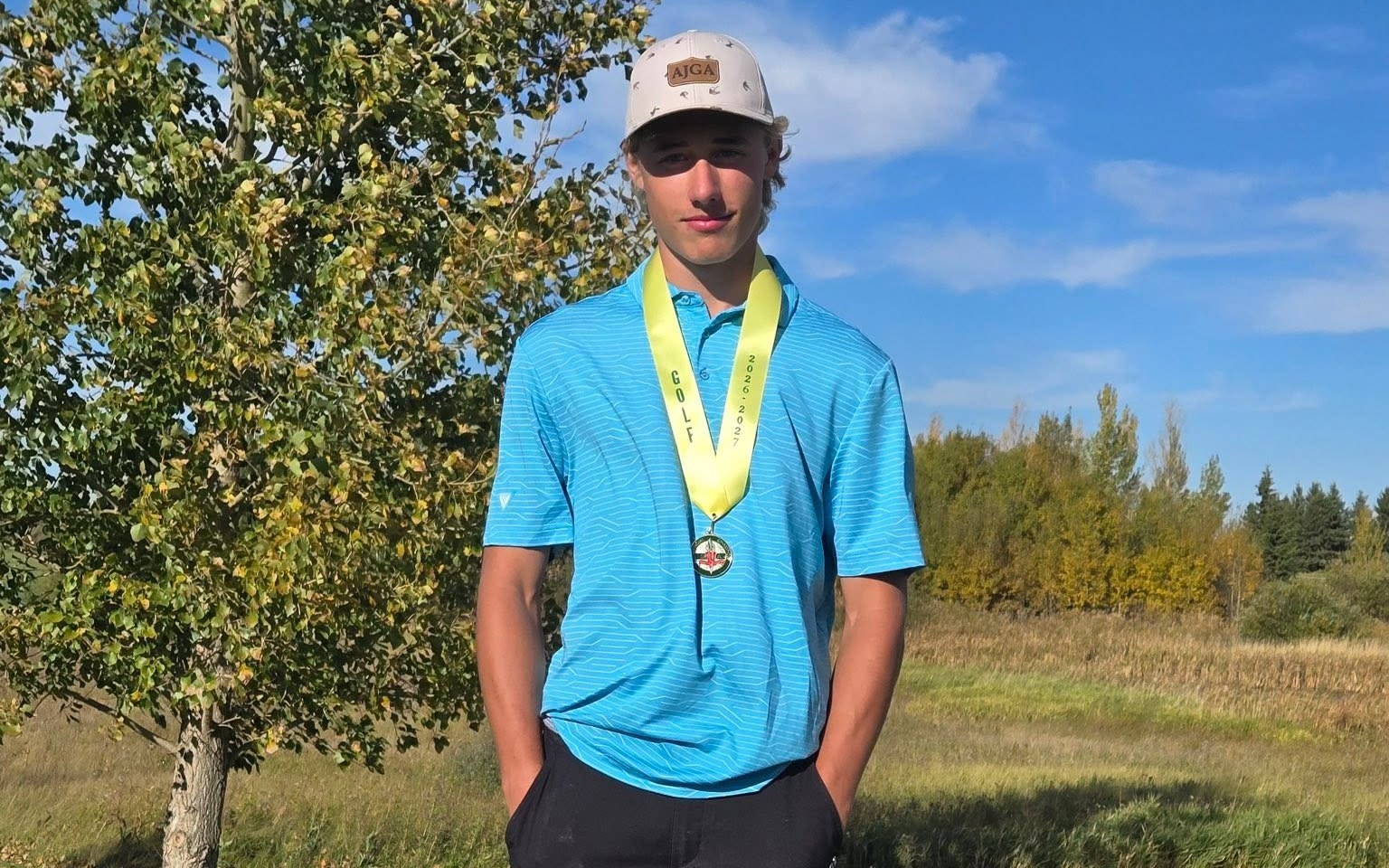
The men’s high school champion was Shae Maunula of North Battleford.
The 16-year-old opened with a 76 on day one, he was the lowest shooter in round two posting a 67 to take the win by five shots over grade 10 Humboldt student Tylan Wallin.
Maunula was one of two players to shoot under par on the second day, Keaton Kreklewich of Melville was the other, he was tied for second with Wallin.
To see the complete results click here.
Maunula’s victory caps his year which also included Saskatchewan under-17 championship and the Junior Men’s Lobstick wins.
He also spoke with Golf Saskatchewan following the high school event at Humboldt. The Humboldt Golf Club is the host of the 2027 Saskatchewan Junior Championships.